Focused arrival windows
Useful updates and clear arrival timing.
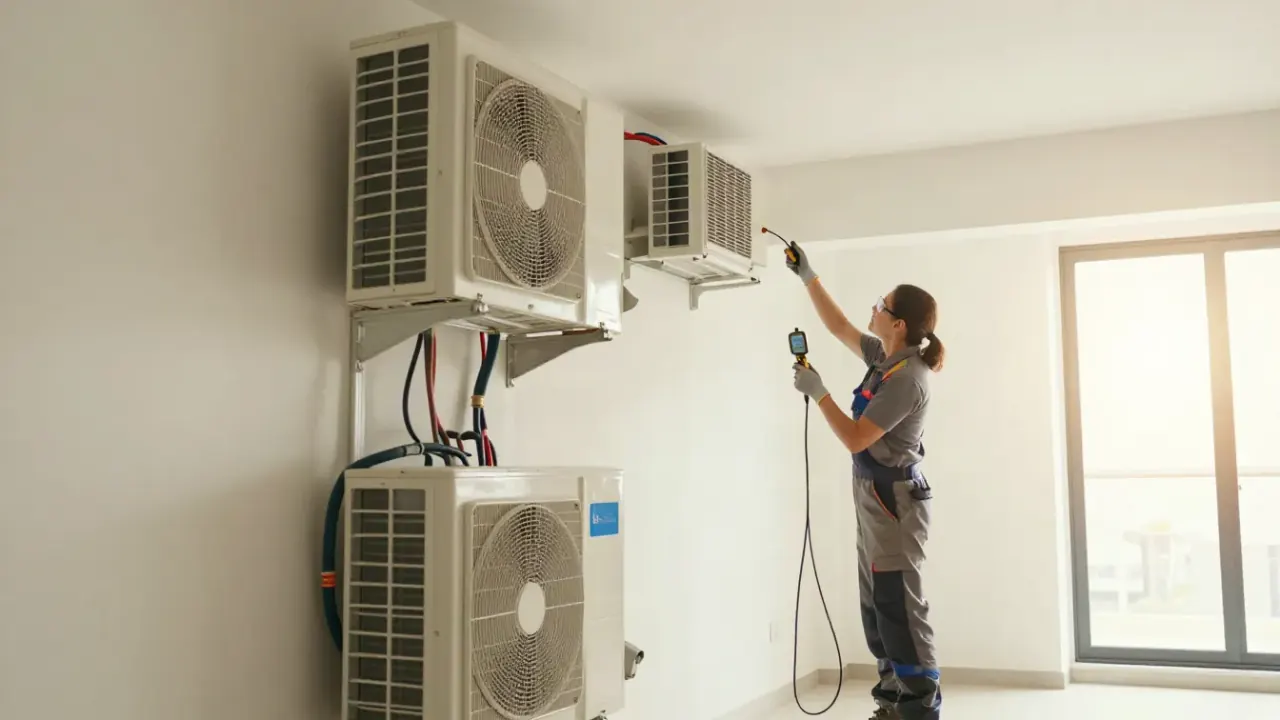
Mini Split Not Heating Repair Rosenberg TX gets your heat back on fast. When your ductless heat pump not heating repair in Rosenberg TX is needed, our licensed techs diagnose refrigerant leaks, frozen coils, and error codes on Mitsubishi, Daikin, and LG systems. We serve Fort Bend County homeowners with same-day service and upfront pricing. Call (281) 738-1427.
Useful updates and clear arrival timing.
Review the approach and price before deciding.
Equipped vehicles and respectful cleanup.
Neighbors serving neighbors with follow-through.
Every heating repair visit includes a full diagnostic, a written price, and a heat-mode test before we leave. Here is what is covered in a standard appointment, and what we quote separately if your system needs it.
We test suction and discharge pressures with a manifold gauge set, check compressor amp draw with a clamp meter, and sweep the flare fittings and line set with a leak detector. You get the diagnosis in plain language, not a sales pitch.
If the system is low, we recover the remaining charge with a recovery machine, find the leak, repair the flare fitting or line set, pull a deep vacuum with a micron gauge, and weigh in new R-410A or R-32 to spec.
Failed capacitors, relays, and boards are common causes of a mini split not heating. We replace the failed component, verify the circuit, and test the unit in heat mode. All electrical work follows code and OSHA safety standards.
A frozen evaporator coil or clogged condensate drain line will shut your heat down. We thaw and clean the coil with coil cleaner, flush the drain line, and add drain pan tablets to keep algae from returning next season.
We run the system in heat mode for at least 15 minutes and measure supply-air temperature at the indoor head. You see the number climb before we pack up. We also note your filter size and cleaning interval for the next season.
Share what is happening and receive a clear next step from the local team.
Mini Split Not Heating Repair Rosenberg TX is a diagnostic and repair service that restores heat output to ductless systems blowing cold air or failing to reach setpoint. When your mini split runs in heat mode but the room stays cold, the cause is usually low R-410A refrigerant, a reversing valve fault, a failed capacitor, or a clogged condensate drain line. We test with a manifold gauge set and clamp meter, then repair the root cause, not just the symptom.
Rosenberg homeowners call us most in October and November when the first cold front hits and the heat pump that worked all summer suddenly blows cold air. If your ductless AC not heating near me search brought you here, you are in the right place. We handle emergency mini split not heating repair Rosenberg TX calls across 77471 and 77469, and we carry common parts like capacitors and flare fittings on every truck so most jobs finish in one visit.
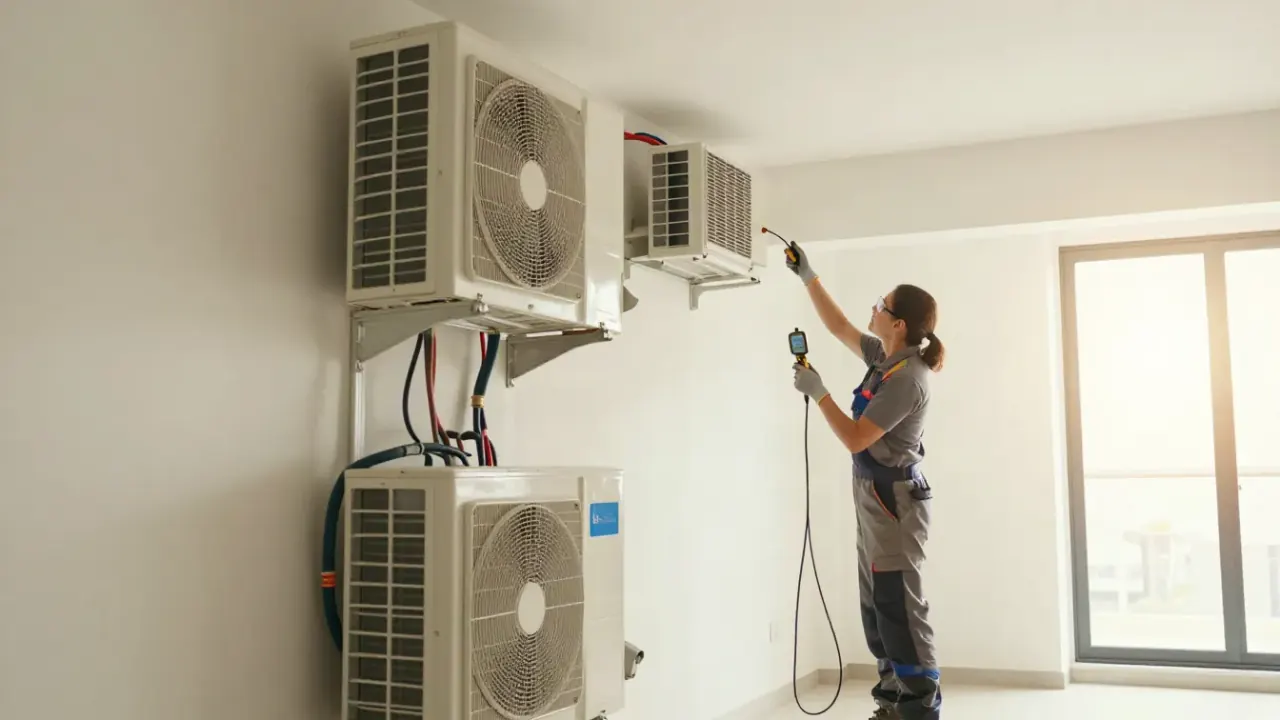
Call (281) 738-1427 and describe what the unit is doing. We ask about the error code, whether the outdoor fan runs, and how long the system has been blowing cold. That five-minute conversation tells us whether to load a recovery machine or a reversing valve kit before we roll.
We arrive in a marked truck and test the system within the first 20 minutes. A manifold gauge set reads suction and discharge pressures, a clamp meter checks compressor amp draw, and a leak detector sweeps the flare fittings and line set. You get the diagnosis in plain language.
Before any repair starts, you see the failed part, the labor, and the total. If the fix is a $220 capacitor, we say so. If it is a refrigerant leak that needs recovery, a nitrogen pressure test, and a recharge, we price that too. You approve, then we work.
We replace the failed component, pull a deep vacuum with a vacuum pump and micron gauge, then weigh in R-410A or R-32 to the manufacturer's spec. Flare fittings get torqued with a torque wrench, not guesswork. Most repairs take two to four hours.
We run the system in heat mode for at least 15 minutes and measure supply-air temperature at the head. You see the number climb. We show you the old part, explain what caused the failure, and note the filter size and cleaning interval so the next season runs clean.
Reads suction and discharge pressures so we can confirm low charge, a restriction, or a reversing valve fault before we touch a single part.
Pulls a deep vacuum after any leak repair and confirms it holds below 500 microns, which is the only way to know moisture and air are out of the line set.
Recovers R-410A or R-32 before a repair so nothing vents to atmosphere. Required under EPA Section 608 rules and standard on every truck.
Sweeps flare fittings, line sets, and coils to pinpoint the leak that dropped your charge and killed your heat.
Measures compressor and fan amp draw to confirm a failed capacitor, a failing motor, or a compressor on its way out.
Tightens flare fittings to the manufacturer's spec. Over-torqued flares are one of the most common causes of the leaks we repair.
Pressurizes the system with dry nitrogen during a pressure test so we can prove a leak is fixed before recharging.
Every refrigerant recovery, recharge, and leak repair follows EPA Section 608 rules. We recover, never vent, and we weigh in the exact charge by manufacturer spec rather than topping off by gauge pressure.
Our technicians follow NATE diagnostic sequences for inverter heat pumps. That means testing in a fixed order, from thermostat call to reversing valve to compressor, so we find the real failure instead of replacing parts until the heat comes back.
After any leak repair we pressurize the system with dry nitrogen and watch the gauge for 15 to 30 minutes. If it holds, we pull a vacuum and recharge. If it drops, we keep looking. No guesswork.
We never call a job done on a pressure reading alone. Every repair ends with a 15-minute heat-mode run and a supply-air temperature measurement at the indoor head, so you see the result before we leave.
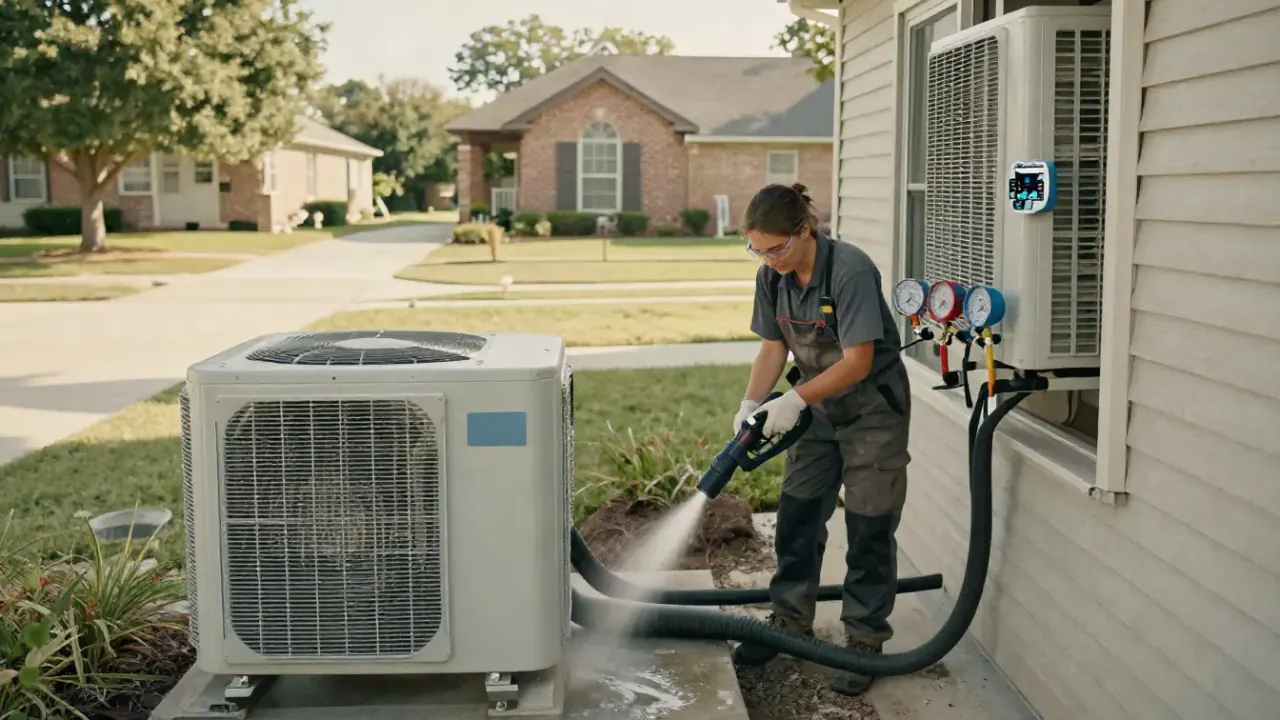
We run a full heat-mode diagnostic, check charge and reversing valve operation, and repair whatever failed during the summer. Most of these calls are a capacitor or a slow refrigerant leak that finally dropped the charge below the threshold. Heat restored the same day, usually within two to four hours of arrival, with a written record of pressures and supply-air temperature.
We prioritize no-heat calls for rental units, coordinate access with the tenant, and send a written repair summary with photos for your records. We stock the common parts so most tenant no-heat calls are one-visit repairs. Tenant has heat the same day, and you get documentation for your files without a second trip or a follow-up invoice.
We test each zone, inspect the branch box and zone valves, and check for a charge imbalance. Repairing the failed zone alone usually restores full heat without disturbing the working zones. All zones heating evenly again, with the failed component identified and replaced in a single visit.
We read the fault code, test the circuit it points to, and repair or replace the failed component. You get the code meaning explained in plain language so you understand what happened. Fault cleared, heat mode verified, and a note of the code and repair in your service record for future reference.
Rosenberg sits in Fort Bend County, where the heating season is short but sharp. The systems we see are built for cooling and pushed into heat mode during hard freezes, which is when most failures surface. Coastal humidity keeps condensate drain lines full of algae, and a clogged line trips the float switch and shuts the system down, which looks exactly like a heating failure. When you search for why is my ductless mini split not heating in Rosenberg Texas, the answer is usually one of four things: low refrigerant from a leaking flare fitting, a failed capacitor, a stuck reversing valve, or a frozen outdoor coil. We carry R-410A, R-32, capacitors, and drain pan tablets on every truck, so most repairs finish in one visit. Homes in Brookewater and Kingdom Heights often have multi-zone systems where one branch box failure leaves a bedroom cold while the rest of the house heats fine. Older units near Fairpark Village tend to have flare fittings that were over-torqued at install, which is why we torque every fitting to spec with a torque wrench. If you need emergency mini split not heating repair Rosenberg TX on a holiday weekend, we answer the phone and we do not add overtime charges.
Newer construction with multi-zone Mitsubishi Electric and Daikin systems. We see branch box failures and charge imbalances here more than single-zone faults.
Established homes with older single-zone systems. Capacitor failures and slow refrigerant leaks at the flare fittings are the most common heating calls.
A mix of rentals and owner-occupied homes. Clogged condensate drain lines and remote communication faults show up often, especially after a wet fall.
Larger homes running four and five zones. When one zone stops heating, we test the branch box and zone valves before assuming a compressor problem.
Outdoor coils ice over and systems lock out. We check the defrost board and sensors, not just the charge, because a defrost fault mimics a refrigerant problem.
Condensate drain lines clog faster here than in dry climates. A clogged line trips the float switch and shuts the system down, which homeowners often mistake for a heating failure.
Systems sit in cooling mode for months, so heating faults surface all at once on the first cold night. That is why we stock heating-season parts year-round.
A three-zone Daikin system ran in heat mode but blew 62-degree air from every head. The homeowner had been on space heaters for four days. Pressures showed low suction, and a leak detector found a leaking flare fitting at the outdoor unit.
We recovered the remaining charge, replaced the flare fitting, torqued it to spec, pulled a vacuum below 500 microns, and weighed in new R-410A. Supply-air temperature at the heads measured 118 degrees before we left.
Maintenance: We noted the filter size and set a twice-a-year cleaning reminder. Keeping the outdoor coil clear and the filters clean is what keeps the charge stable and the heat strong.
A single-zone LG unit in The Oaks of Rosenberg iced over on the first cold night and stopped heating. The outdoor fan was not running. Amp draw on the fan circuit read zero, which pointed straight at the capacitor.
We thawed the coil, replaced the failed capacitor, and verified the defrost cycle. The system ran a full 20-minute heat cycle and held 112-degree supply air. Total repair time was under two hours.
Maintenance: We added drain pan tablets and flushed the condensate line. A clean coil and a clear drain are the two cheapest ways to avoid a repeat freeze next winter.
A five-zone Mitsubishi Electric system heated four rooms but left the primary bedroom at 58 degrees. The homeowner assumed the whole system needed replacement. Testing showed a failed branch box circuit feeding that one zone.
We replaced the branch box circuit, rebalanced the charge, and tested all five zones individually. Every zone reached setpoint within 25 minutes, and the homeowner avoided a full system replacement.
Maintenance: We set a maintenance schedule that includes a per-zone test at each visit. Catching a branch box fault early is what keeps a five-zone system heating evenly.
Most heating failures fall into five categories. We diagnose which one you have on the first visit, so you are not paying for guesswork or a second trip.
You burn through backup heat and your electric bill climbs while the room never reaches setpoint. Left alone, a low-charge system can destroy the compressor. We check the reversing valve, refrigerant charge, and outdoor unit defrost cycle. In most Rosenberg cases the fix is a leak repair and recharge, or a reversing valve replacement. We confirm with pressure and temperature readings before quoting.
Ice buildup blocks airflow and the system shuts down to protect itself. Repeated freeze cycles stress the compressor and shorten system life. We thaw the coil, test the defrost board and sensors, and check charge. A frozen coil in heat mode usually points to a refrigerant fault or a failed defrost sensor. We repair the cause and verify the defrost cycle runs before we leave.
The system locks out and you have no heat until the fault clears. Guessing at the code can lead to unnecessary parts replacement. We read the manufacturer fault code for Mitsubishi Electric, Daikin, Fujitsu, LG, and Samsung systems, then test the specific circuit it points to. You get the code meaning, the failed part, and a written price in one visit.
Multi-zone systems with a failed branch box or zone valve leave part of your home cold while the rest runs fine, which usually means a bigger repair if ignored. We test each zone individually, check the branch box and zone valves, and verify charge balance. Most multi-zone heating failures in Rosenberg are repaired without touching the zones that still work.
$180 - $850 depending on scope
Typical 2026 pricing for mini split not heating repair in Rosenberg runs $180 to $850 depending on the failed component. A capacitor or float switch replacement sits at the low end. A refrigerant leak repair with recovery, nitrogen pressure test, and recharge runs $450 to $850. Multi-zone branch box repairs and compressor replacements cost more. You get a flat diagnostic fee and a written repair price before we start, and we do not add overtime charges for nights or weekends. If the repair is not worth the cost, we tell you and quote replacement instead.
A $400 repair that restores heat is far cheaper than a $6,000 system replacement. We quote the fix first, show you the failed part, and let you decide. No pressure, no upsell, no overtime charges.
A $30 capacitor is a fast, cheap fix. A reversing valve or compressor is a multi-hour job with refrigerant recovery and recharge. The part that failed drives most of the price difference.
R-410A and R-32 are priced differently, and the charge weight varies by system size. A full recharge after a leak repair costs more than a top-off, but a top-off without a leak repair is money wasted.
A leaking flare fitting at the outdoor unit is a quick repair. A leak inside a wall or ceiling line set takes longer to access and repair, which adds labor.
Single-zone systems are simpler and cheaper to repair. Multi-zone systems with a branch box take longer to test and balance, which adds diagnostic and labor time.
An indoor head mounted high on a vaulted wall takes longer to service than a low wall unit. Outdoor units on a roof or in a tight side yard add time and sometimes a second technician.
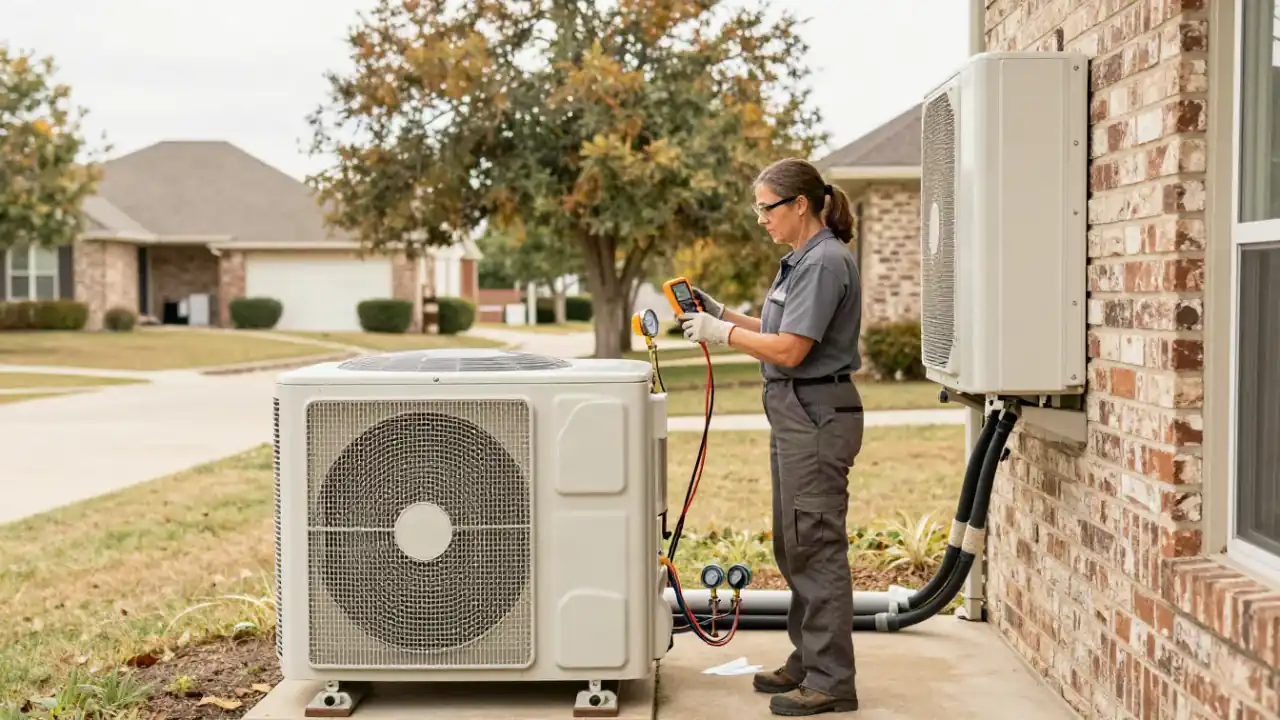
Our technicians work on ductless systems every week, not once a season. That repetition is why we can hear a reversing valve fail over the phone and why we keep R-410A, R-32, and common capacitors in stock. We hold EPA Section 608 certification for refrigerant handling, NATE certification for heat pump diagnostics, and we work under a Texas HVAC contractor license and TDLR license. Every job follows OSHA safety training standards, and every repair is documented with pressure readings, amp draw, and final supply-air temperature so you have a record of what was fixed and when.
Our Daikin started blowing cold air the first cold night in November. They came out the next morning, found a leaking flare fitting, repaired it, and recharged the system. Heat was back by lunch. The tech showed me the old fitting and the pressure readings before and after. Fair price, no upsell.
Two of our four zones stopped heating and I thought we needed a whole new system. Turned out to be a branch box issue and a bad capacitor. They fixed both in one visit for under $600. I appreciated that they tested every zone before leaving instead of just the two that failed.
I manage several rental units in Rosenberg and use them for every mini split call. They answer the phone, they show up when they say, and they send a written summary with pressures and amp readings for my records. Last month they fixed a frozen coil and a clogged drain line in one trip.
The most common cause is low refrigerant from a leak at the flare fittings, followed by a failed reversing valve, a bad capacitor, or a clogged condensate drain line that trips the float switch. In Rosenberg, hard freeze events also ice up the outdoor coil. We test pressures and amp draw on site and tell you the exact failure in about 30 minutes.
Typical 2026 repairs in Rosenberg run $180 to $850. A capacitor or float switch replacement sits at the low end. A refrigerant leak repair with recovery, nitrogen pressure test, and recharge runs $450 to $850. Multi-zone failures and compressor repairs cost more. You get a written price before we start work.
Yes. We stock R-410A, capacitors, flare fittings, and drain parts on every truck, so most same-day mini split not heating service near me Rosenberg calls are repaired in one visit. Call (281) 738-1427 before 2 p.m. and we can usually have heat restored the same afternoon.
Cold air in heat mode almost always means the system is low on charge, the reversing valve is stuck, or the outdoor unit is iced over and locked out. A remote and thermostat communication fault can also leave the indoor head in fan-only mode. We check all four on the first visit so you are not paying for a second trip.
Not seeing your question? Our local team can help you understand urgency, scheduling and what to expect.
Ask the local team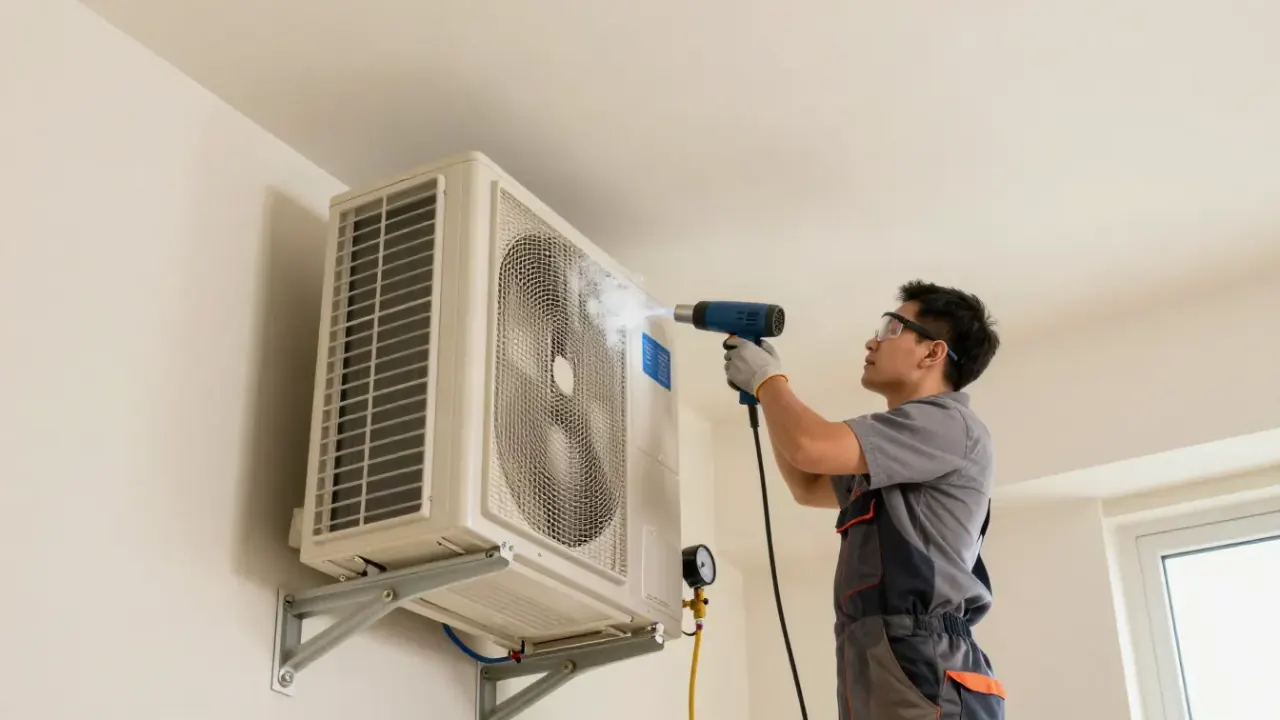
The mirror image of a heating failure. If your system runs but the room stays warm in July, the same refrigerant, capacitor, and coil problems are usually at fault. We diagnose both modes in one visit so you are not calling us twice.
View serviceLow R-410A is the number one reason a Rosenberg mini split stops heating. We use a leak detector and nitrogen pressure test to find the leak at the flare fittings or line set, repair it, then weigh in the correct charge. Recharging without fixing the leak just delays the next failure.
View service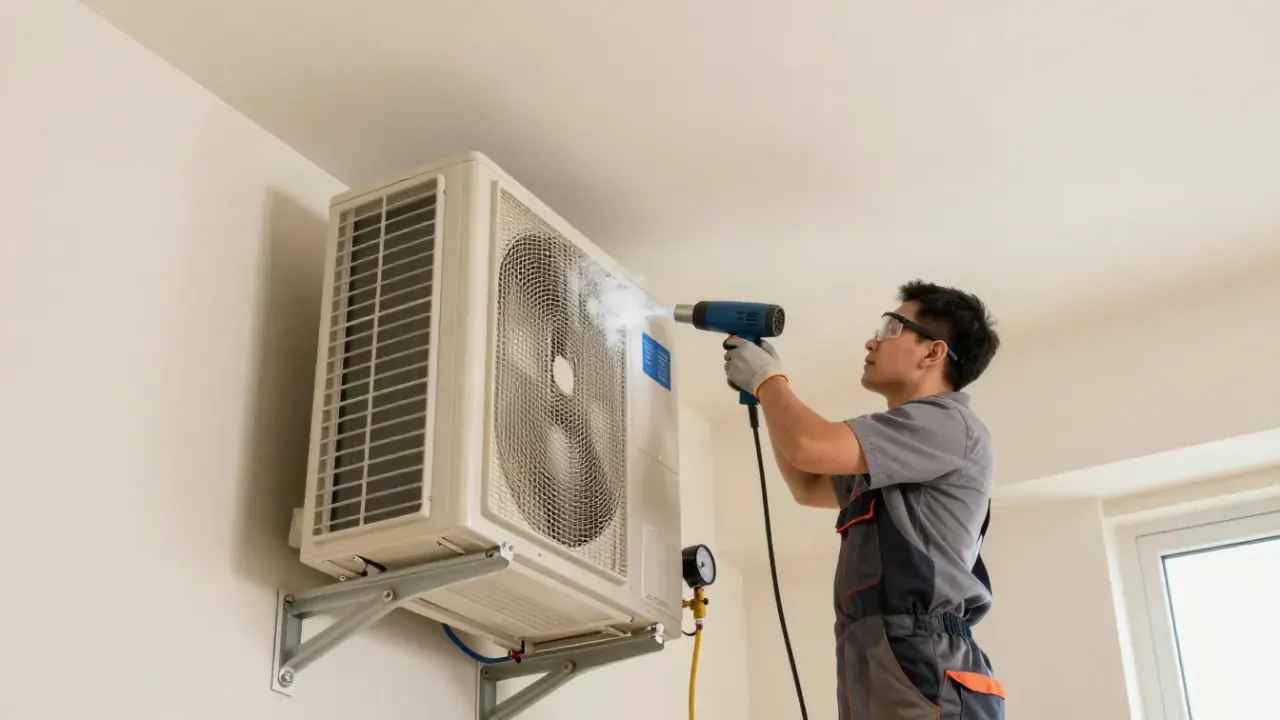
A frozen evaporator coil blocks airflow and drops heat output to nothing. We thaw the coil, clean it with coil cleaner, and check the defrost cycle and charge. Ice buildup in heat mode usually points to a refrigerant or defrost board fault, not just cold weather.
View service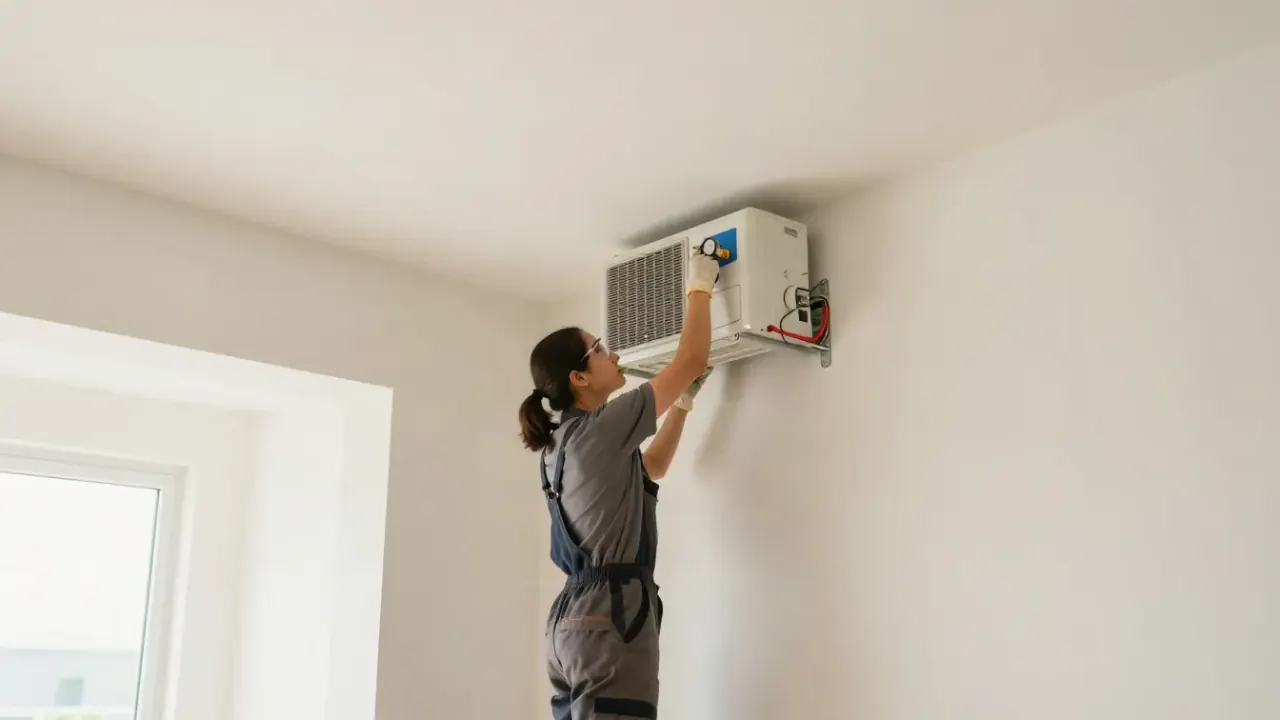
Blinking LEDs and error codes on Mitsubishi Electric, Daikin, and LG heads tell us exactly which circuit failed. We read the code, test the component, and clear the fault. Guessing at error codes wastes refrigerant and your money.
View service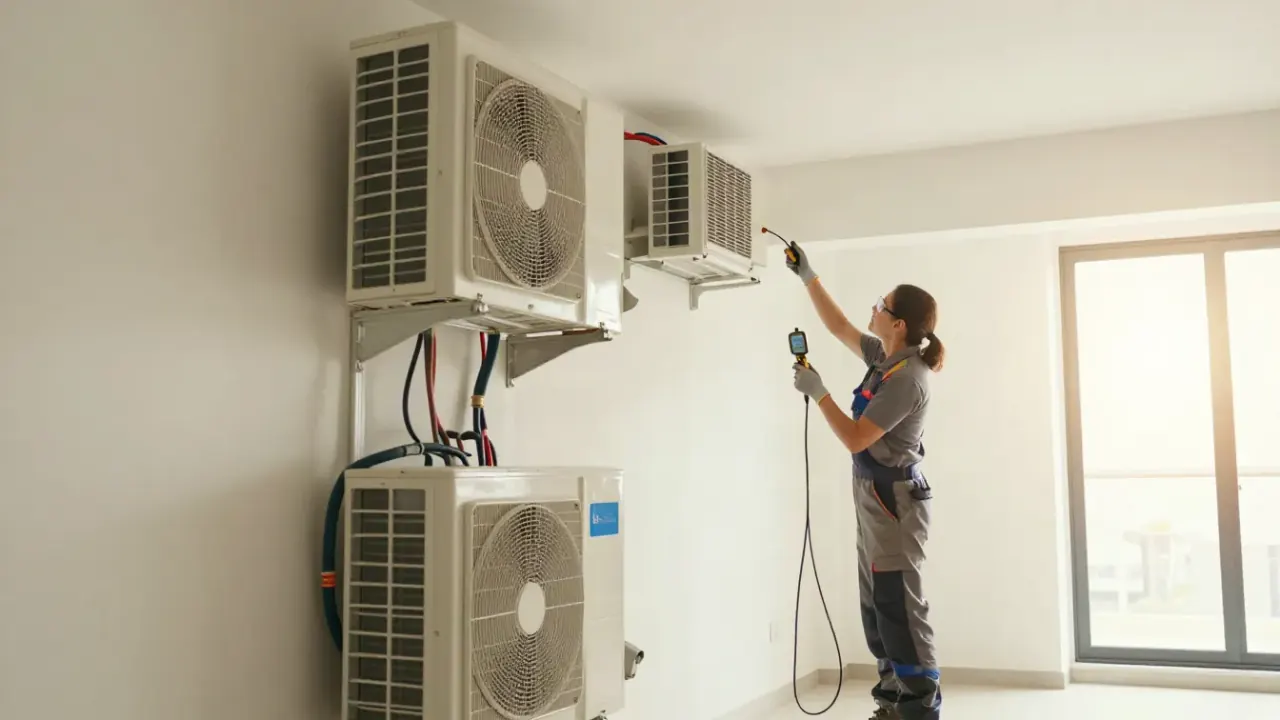
Call (281) 738-1427 or send us a message and we'll get back to you fast. We're open Monday through Friday, 8am to 6pm, and we take emergency calls for no-cool situations. If your unit quit on a weekend, leave a message and we'll call you back first thing.