Focused arrival windows
Useful updates and clear arrival timing.
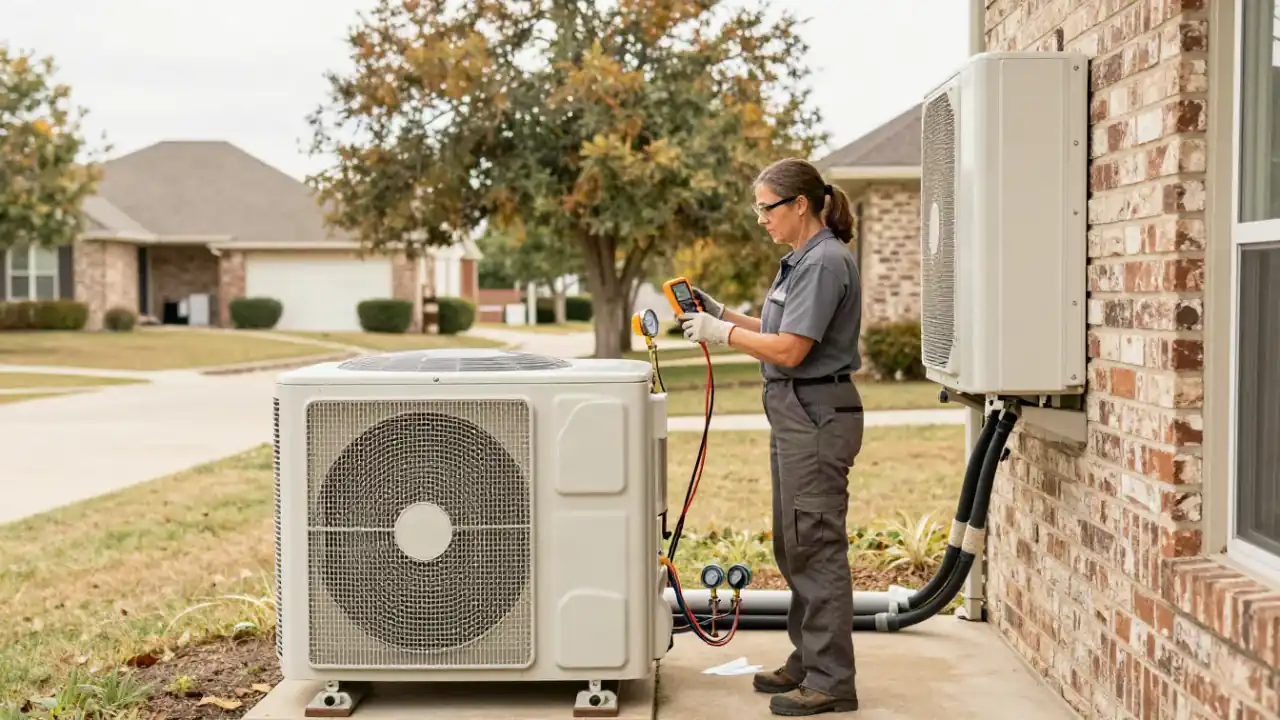
Mini Split Compressor Repair Rosenberg TX is what we do every week, and we do it with the gauges, recovery gear, and EPA Section 608 credentials the job actually requires. If your ductless system is blowing warm air, tripping the breaker, or throwing an error code, the outdoor unit is the first place we look. We serve homeowners in Rosenberg, Richmond, Sugar Land, and the surrounding Fort Bend County neighborhoods with same-day diagnosis and honest repair-or-replace guidance.
Useful updates and clear arrival timing.
Review the approach and price before deciding.
Equipped vehicles and respectful cleanup.
Neighbors serving neighbors with follow-through.
Every compressor job includes full electrical and refrigerant diagnosis, not just a parts swap. We test the capacitor, contactor, windings, and charge before we recommend anything, and we document the readings. Parts and labor are quoted upfront. If the honest answer is that replacement makes more sense than repair, we tell you that too.
Capacitor microfarad test, contactor inspection, winding resistance and insulation check with a clamp meter, and amp-draw comparison against the nameplate. This is what separates a real compressor failure from a $200 electrical fault.
Manifold gauge readings on both suction and liquid lines, compared against ambient temperature and manufacturer charging charts. We confirm whether the compressor failed because of a leak, an overcharge, or plain age.
Before any compressor goes in, we pressure-test the line set and flare fittings with nitrogen and a leak detector. Installing a new compressor on a leaking system is the fastest way to void a warranty and repeat the failure.
Recovery of the old charge, new filter drier, nitrogen-purged brazing, torque-spec flare fittings, and a vacuum pulled to 500 microns with a micron gauge. We weigh in fresh R-410A or R-32 rather than topping off.
Full cooling and heating cycle test, supply and return temperature split measurement, and final amp-draw check. You get the readings on your invoice as a baseline for future service.
Share what is happening and receive a clear next step from the local team.
Mini Split Compressor Repair Rosenberg TX is a diagnostic and mechanical service that restores the outdoor unit pumping refrigerant through your ductless system when it stops, shorts out, or loses capacity. The compressor is the heart of the outdoor condenser - it pressurizes R-410A or R-32 refrigerant so the indoor head can absorb heat. When it fails, nothing else in the system matters. We test the capacitor, windings, contactor, and refrigerant charge with a manifold gauge set and clamp meter before we quote anything.
Most Rosenberg calls we run start the same way: a mini split not cooling in August, a breaker that trips within seconds of startup, or a unit that hums and shuts down. Texas Gulf Coast humidity and 95-degree summers push compressors hard, and a low refrigerant charge from a slow leak will cook one in a single season. If you are searching for a mini split compressor near me in Rosenberg TX, we handle diagnosis and repair on Mitsubishi Electric, Daikin, Fujitsu, LG, Samsung, Carrier, Trane, Bosch, Gree, and Pioneer equipment.
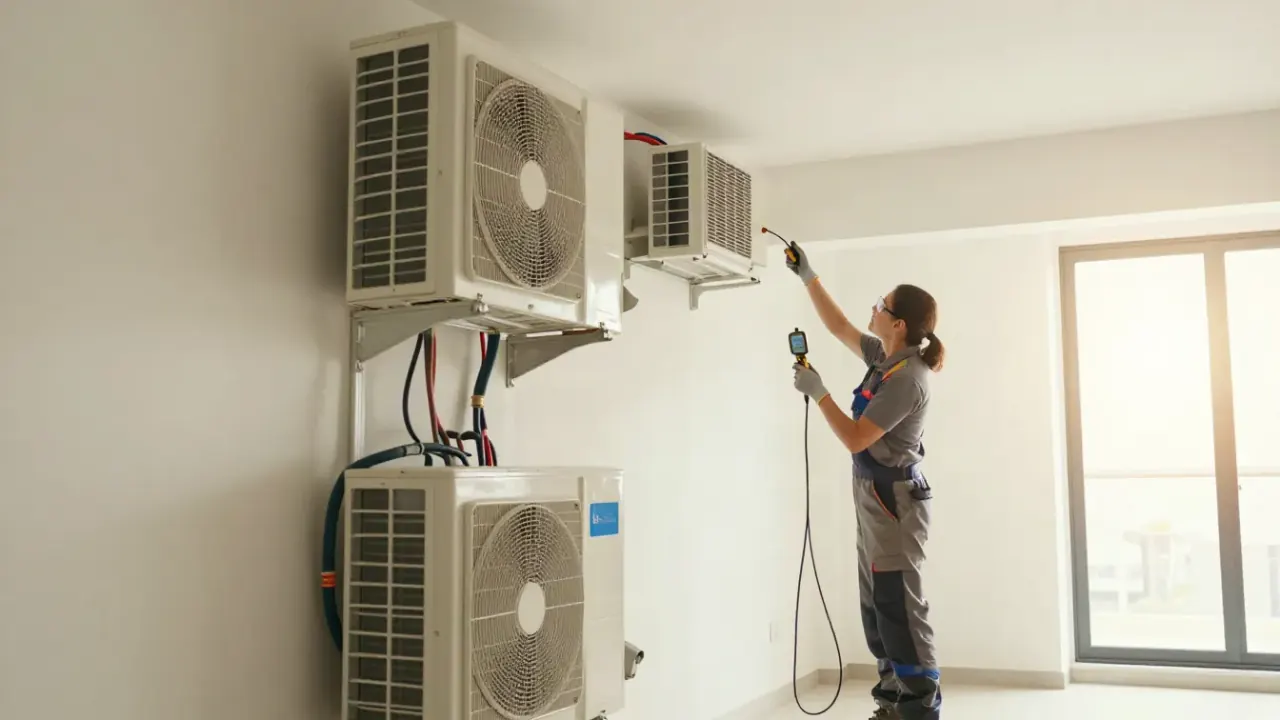
We ask what the unit is doing - not cooling, not heating, tripping the breaker, flashing an error code, or making noise. That five-minute conversation tells us whether to bring recovery equipment or just a meter, and it lets us give you a realistic arrival window instead of a four-hour block.
On site we pull the disconnect, test the capacitor and contactor with a clamp meter, and ohm the compressor windings. Then we hook up the manifold gauge set and check suction and liquid pressures against ambient temperature. This takes 30 to 45 minutes and separates a true compressor failure from a cheap electrical fault.
A compressor that died from a refrigerant leak will die again. We pressure-test the line set and flare fittings with nitrogen and a leak detector, and inspect the evaporator coil for ice buildup or a clogged condensate drain line. If we find the leak, you get the repair price before we recover a single ounce.
Capacitor, contactor, or board swaps take under an hour. A full compressor changeout runs three to five hours: recover the charge, cut and re-braze the lines, install a new filter drier, pull a deep vacuum to 500 microns, and weigh in fresh refrigerant. We torque flare fittings to spec rather than guessing.
We run the system through a full cooling and heating cycle, measure supply and return air temperature split, and check amp draw against the nameplate. Then we log the readings, refrigerant weight, and micron level on your invoice so you have a baseline for next season.
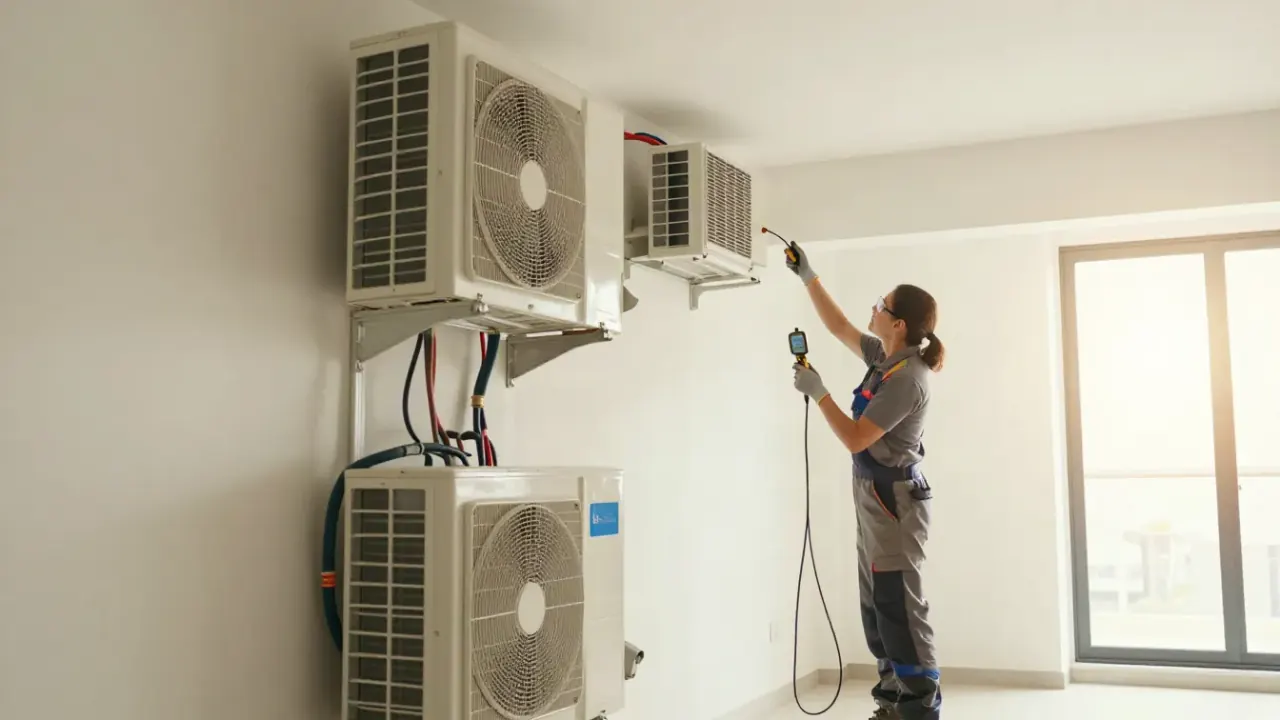
Reads suction and liquid line pressures so we can compare actual charge against the manufacturer chart for the ambient temperature. It is the first instrument on every diagnostic.
Pulls moisture and non-condensables out of the system after a compressor changeout. We hold below 500 microns before charging, which is what protects the new compressor.
Recovers the existing R-410A or R-32 charge legally before we open the sealed system. EPA Section 608 rules require it, and it keeps the old refrigerant out of the atmosphere.
Measures running amps and compares them to the compressor nameplate rating. High amp draw with low cooling output is the classic signature of a failing compressor.
Pressurizes the line set and flare fittings with nitrogen, then finds the leak with an electronic detector. We never install a compressor without confirming the system holds pressure.
Tightens flare fittings to the manufacturer's inch-pound spec. Over-torqued flares crack and leak; under-torqued flares leak slowly. Both kill compressors.
Straightens bent condenser fins and flushes dirt out of the coil. A clean coil keeps head pressure and compressor amp draw where they belong.
We recover the full charge into a certified cylinder, evacuate the system to 500 microns, and weigh in new refrigerant by scale rather than estimating. This is the legal and technical standard for any sealed-system repair in Texas.
Flowing nitrogen through the lines while brazing prevents copper oxide flakes from forming inside the tubing. Those flakes migrate to the compressor and destroy it. It is a small step that separates a lasting repair from a callback.
We charge to the manufacturer's chart for the actual ambient temperature and use AHRI-matched compressors and filter driers. Mismatched components reduce capacity and can void the equipment warranty.
Capacitor microfarad test, contactor inspection, winding resistance, and insulation-to-ground check. We prove the compressor is failed before we quote a replacement, because a $200 capacitor imitates a dead compressor convincingly.
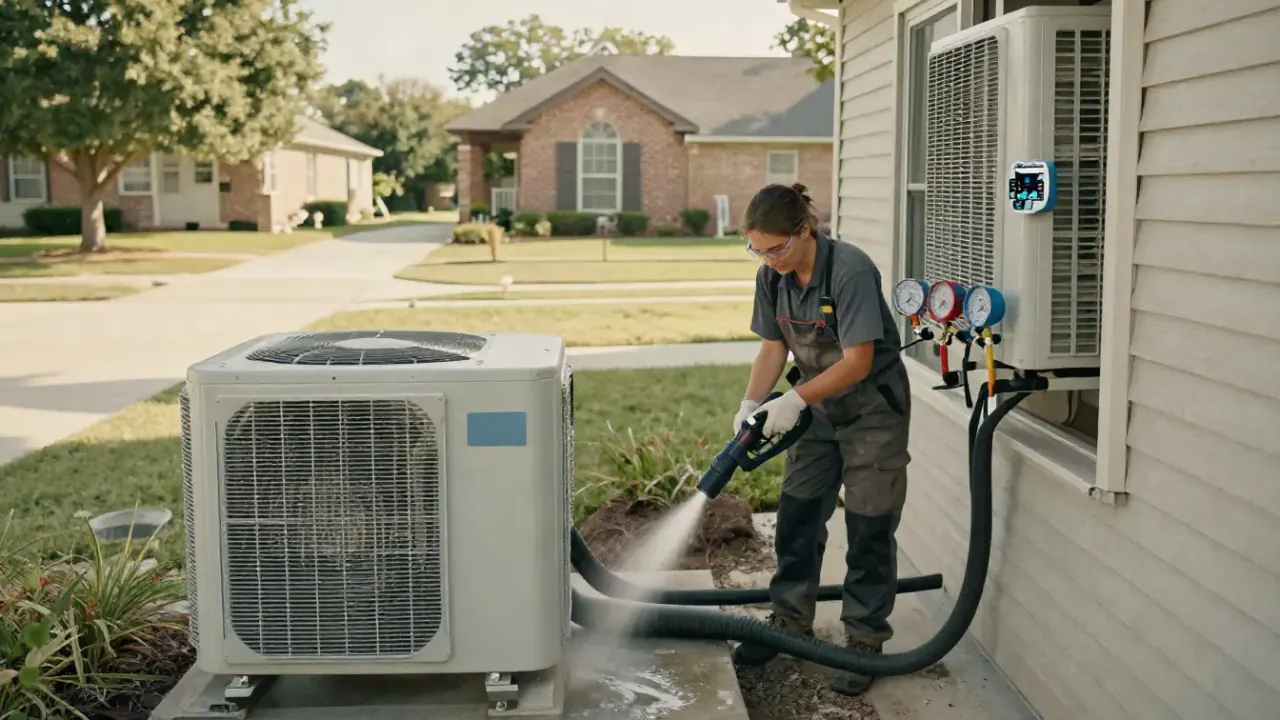
We run an emergency mini split compressor repair Rosenberg TX call, test the capacitor and windings on site, and confirm whether the compressor is actually failed. If it is, we check truck stock for a matching unit before we leave the driveway. Most customers are back to cooling the same day, with the old charge recovered and the new compressor documented for warranty.
We test each zone individually, check the branch box wiring, and verify compressor amp draw under partial load. Multi-zone failures are often a branch box or communication fault rather than a dead compressor. You get a clear answer on whether the outdoor unit is at fault, and the repair is scoped to the actual failed component instead of the whole system.
We isolate the fault with a clamp meter and insulation test, confirm whether the compressor is shorted to ground, and give the owner a repair-versus-replace comparison with both prices. The owner makes the call with real numbers, and the tenant gets a working system without a week of back-and-forth.
We isolate the noise with a vibration check and stethoscope. Grinding is often a fan motor bearing or a loose mount, not the compressor. We confirm before recommending any major part. Several of these end as a $300 to $500 repair instead of a $2,000 compressor replacement, and the noise is gone.
Rosenberg sits in Fort Bend County where summer highs run 95 to 100 degrees with heavy humidity, and that combination is brutal on ductless compressors. Systems here run longer cycles than in drier climates, which means higher head pressure and more wear on the compressor valves. Winter brings the opposite problem: hard freezes like the ones that hit the Gulf Coast push heat-pump compressors into defrost cycles they were not sized for, and we see a spike in no-heat calls every January. Most of the housing stock we work in - Briarwood Crossing, Brookewater, Kingdom Heights, and the older homes near Fairpark Village - has ductless systems installed within the last decade, so we are usually repairing rather than replacing. Texas HVAC contractor licensing and TDLR registration govern every refrigerant-handling job we run, and we follow EPA Section 608 rules on recovery and charging without exception. If you need Rosenberg TX mini split compressor diagnosis and repair, we bring the recovery machine, nitrogen, and common capacitors so most jobs finish in one visit.
Newer construction with multi-zone ductless systems. We see branch box communication faults here that mimic compressor failure, so we test zones individually before quoting.
Larger homes running five-zone Mitsubishi and Daikin systems. Partial-load compressor operation on these units makes amp-draw testing essential to a correct diagnosis.
A mix of single-zone and older R-410A equipment. Capacitor and contactor failures are common here, and many look exactly like a dead compressor until we meter them.
Older housing stock with retrofit ductless installs. Line-set routing and flare quality from previous installs are frequent leak sources that lead to compressor failure.
Compressors run near continuous duty, raising head pressure and amp draw. We check condenser coil cleanliness and charge on every summer call because both directly affect compressor load.
Condenser coils and electrical terminals corrode faster here than inland. Corroded terminals cause voltage drop that overheats compressor windings, so we inspect and clean them during diagnosis.
Heat-pump compressors cycle through defrost more often during freeze events. We verify defrost board operation and charge in winter so the compressor is not running under a fault condition.
Expansive clay can shift condenser pads out of level, stressing refrigerant lines and flare fittings. We check pad level and line-set support on every outdoor unit inspection.
A homeowner in The Oaks of Rosenberg had a Daikin single-zone unit that hummed for five seconds and shut off. The breaker held, but the indoor head never produced cold air. Two prior companies quoted a full system replacement at over $4,000.
We tested the capacitor at 12 microfarads against a 35-microfarad rating, replaced it, and confirmed the compressor started cleanly with amp draw within 4% of nameplate. Total bill was $240, and the system has run two full summers since.
Maintenance: We set a reminder to check capacitor microfarads and condenser coil cleanliness each spring. A $240 part beats a $4,000 system every time.
A five-zone Mitsubishi system in Brookewater lost two zones over three weeks. Pressures were flat, and the compressor was running hot with high amp draw. The system had never been leak-tested since installation.
We found a leaking flare fitting at the branch box, repaired it, replaced the compressor and filter drier, pulled vacuum to 420 microns, and weighed in fresh R-410A. All five zones returned to a 19-degree temperature split.
Maintenance: Annual pressure and amp-draw checks plus a flare inspection each fall keep the repair holding. We logged the baseline readings on the invoice.
A rental property in Fairpark Village tripped its breaker every time the tenant turned on the AC. The unit was 13 years old and the owner assumed the compressor was shorted to ground and needed replacement.
Insulation testing showed the compressor was sound. The fault was a burned contactor and a loose lug at the disconnect. We replaced both, torqued the connections, and the system ran a full cooling cycle at 11.2 amps against a 12-amp nameplate rating.
Maintenance: We recommended an annual electrical inspection on this unit, since loose lugs and pitted contactors are the leading cause of repeat breaker trips in older Rosenberg installs.
Most compressor failures do not start at the compressor. They start with a small leak, a dirty coil, or a weak capacitor, and the compressor pays the price months later. Here is what we see most often and how we handle it.
This is a locked rotor symptom. Every failed start attempt pushes locked-rotor amps through the windings and can take the inverter board with it within days. We test the capacitor and contactor first, then ohm the windings. If the compressor is locked, we quote a changeout with a new filter drier and a nitrogen pressure test so the replacement is not sitting on an unfixed leak.
A tripping breaker means the circuit is drawing more current than it should. Left alone, it can damage the wiring, the disconnect, and the compressor terminals. We isolate whether the fault is the compressor, the inverter board, or the wiring itself using a clamp meter and insulation test. Many of these turn out to be a shorted compressor, but we prove it before quoting.
A compressor losing capacity from worn valves or a low charge runs longer and hotter, driving up electric bills and shortening its own life every week. We check charge with a manifold gauge set, verify airflow across the coil, and compare compressor amp draw to spec. If the valves are weak, we price a ductless AC compressor replacement in Rosenberg, Texas alongside the repair option.
A frozen evaporator coil starves the compressor of returning refrigerant, which causes it to overheat. Repeated freeze cycles are one of the most common causes of premature compressor death. We thaw the coil, clean it, verify the blower and filter, and pressure-test for the leak that caused the low charge in the first place. Fixing the freeze is usually what saves the compressor.
$180 - $2,600 depending on scope
Typical 2026 pricing in the Rosenberg area runs $180 to $400 for capacitor, contactor, or board repairs, $450 to $1,400 for compressor-related repairs involving refrigerant work, and $1,200 to $2,600 for a full ductless AC compressor replacement Rosenberg TX job. Multi-zone systems, R-32 equipment, and hard-to-source brands sit at the higher end. Our diagnostic fee applies toward the repair if you move forward, and we quote the full number before we open the system. No surprise refrigerant charges at the end.
A compressor replacement at $1,800 that buys another 10 years from a system with good coils and matched indoor heads is far cheaper than a $6,000 new install. We show you the math before you decide.
A single-zone outdoor unit holds one compressor and a straightforward charge. Multi-zone systems use a larger compressor and a branch box, which adds recovery time, refrigerant volume, and labor. Expect the multi-zone job to run 30 to 50 percent higher.
R-410A is widely stocked and priced lower. R-32 is increasingly common in newer Mitsubishi and Daikin equipment and costs more per pound. A system holding six pounds of R-32 adds real cost to a replacement.
Common Mitsubishi Electric, Daikin, and LG compressors are often on the truck, which keeps the job to one visit. Older or less common brands may need an ordered part, adding one to two business days and a possible temporary cooling setup.
If the compressor failed because of a leak, the leak must be found and fixed first. That adds nitrogen pressure testing, leak detection, and sometimes line-set or flare work. Skipping it guarantees a repeat failure.
On a system past 12 to 15 years with a corroded coil, replacement often costs less per year of remaining life than a compressor swap. We price both paths so you can compare honestly rather than guess.
Outdoor units mounted on a roof, behind a fence, or with long line-set runs take more time to recover, braze, and evacuate. Difficult access adds labor hours but never changes the diagnostic standard.
Our Daikin stopped cooling on a Saturday in July and the outdoor unit was just humming. They came out the same afternoon, tested the capacitor first, and it turned out the compressor was actually fine - a $210 fix instead of the $2,000 replacement another company quoted me. Straight shooters. I have used them twice since for maintenance.
Two of our five zones quit cooling and I was sure the compressor was gone. The tech found a refrigerant leak at a flare fitting, repaired it, recharged the system, and both zones came back. He showed me the micron gauge reading before he left. That level of detail is why I will not call anyone else.
I manage several rentals and had a Mitsubishi compressor fail during a heat advisory. They prioritized it, had the replacement compressor on the truck, and had the unit running the same day. Tenant was happy, I did not lose a week of rent. Invoicing was clean and the warranty paperwork came through email that night.
Most compressor repairs in Rosenberg run $450 to $1,400 in 2026, and a full compressor replacement typically lands between $1,200 and $2,600 depending on tonnage and brand. Capacitor and contactor fixes sit at the low end, around $180 to $400. Multi-zone systems and R-32 equipment cost more because of refrigerant type and parts availability. We quote the exact number after diagnosis, before any work starts.
Three signs point at the compressor: the outdoor unit hums and shuts off within seconds, the breaker trips on every startup, or the system runs constantly and never cools. A clamp meter reading high amp draw plus a manifold gauge reading flat pressures confirms it. Sometimes it is only a $200 capacitor imitating a dead compressor, which is why we test before quoting.
Yes, when the replacement compressor is in stock. We carry common single-zone and multi-zone compressors for Mitsubishi Electric, Daikin, and LG on the truck, and a changeout takes three to five hours including recovery, brazing, vacuum to 500 microns, and recharge. If your model needs an ordered part, we usually have it within one to two business days and can set a temporary cooling plan.
If the system is under 10 years old and the rest of the equipment is sound, repair is almost always worth it - you keep the matched indoor heads and line set. Past 12 to 15 years, or if the coil is corroded from Gulf Coast humidity, replacement usually wins on cost per year of life. We price both options so the decision is yours, not ours.
Not seeing your question? Our local team can help you understand urgency, scheduling and what to expect.
Ask the local teamWarm air from the indoor head is the number one symptom of a failing compressor. We diagnose the whole circuit - charge, capacitor, board, and compressor - so you are not paying to replace a part that was never the problem in your Rosenberg home.
View service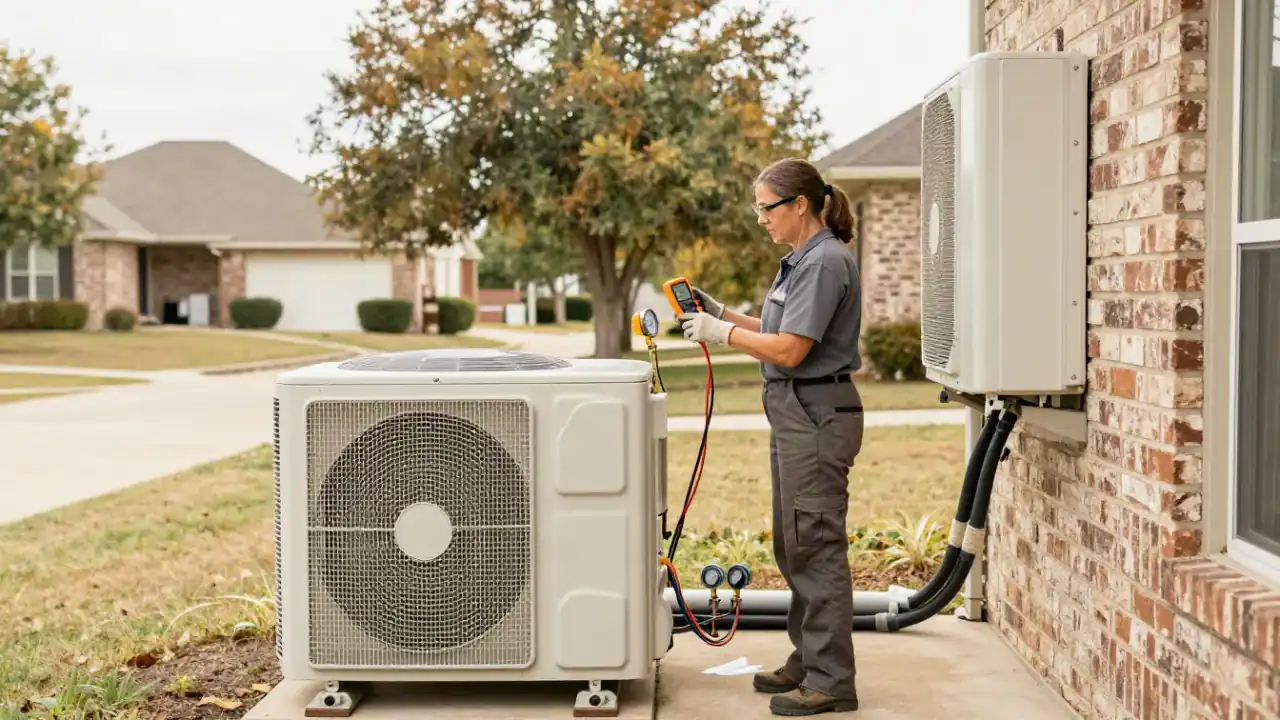
Heat mode stresses the reversing valve and compressor differently than cooling. If your system heats poorly or locks out in defrost, we test compressor amp draw and refrigerant charge together, since a weak compressor often shows up in heating season first.
View service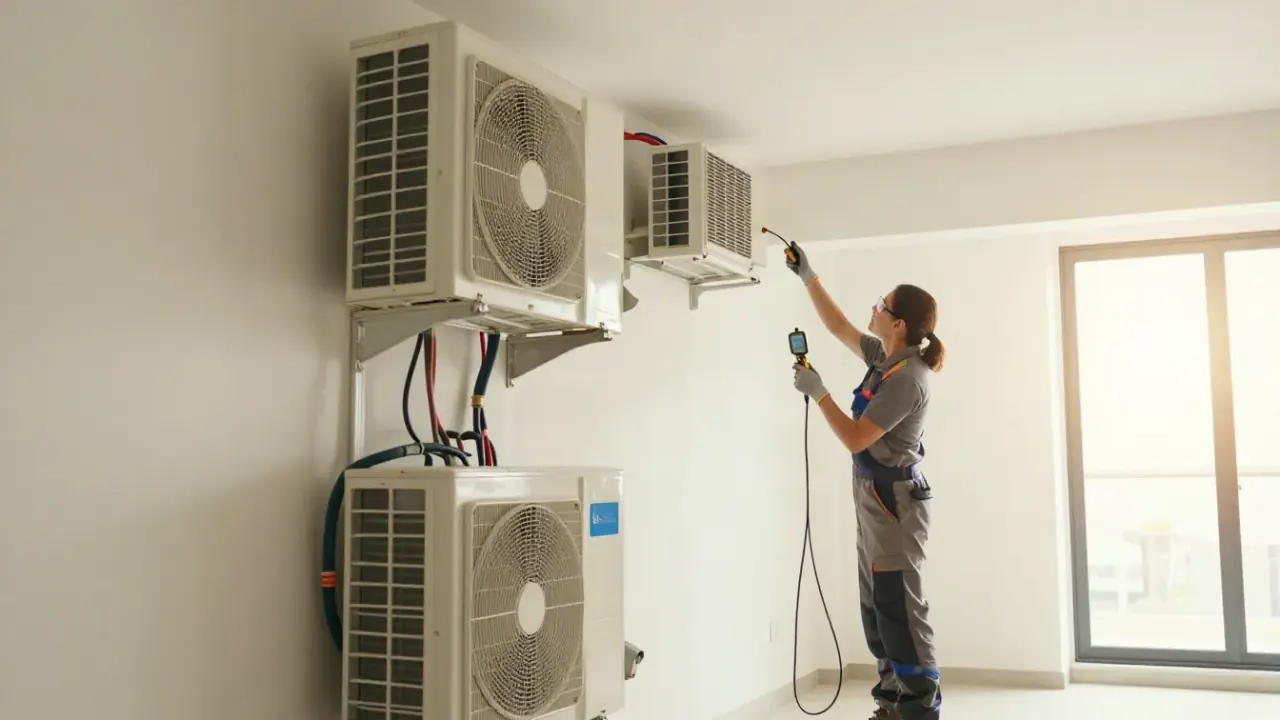
A slow leak is what kills most compressors. We pressure-test with nitrogen, locate the leak at the flare fittings or coil, repair it, then weigh in fresh R-410A or R-32. Recharging without fixing the leak just buys you another compressor failure.
View service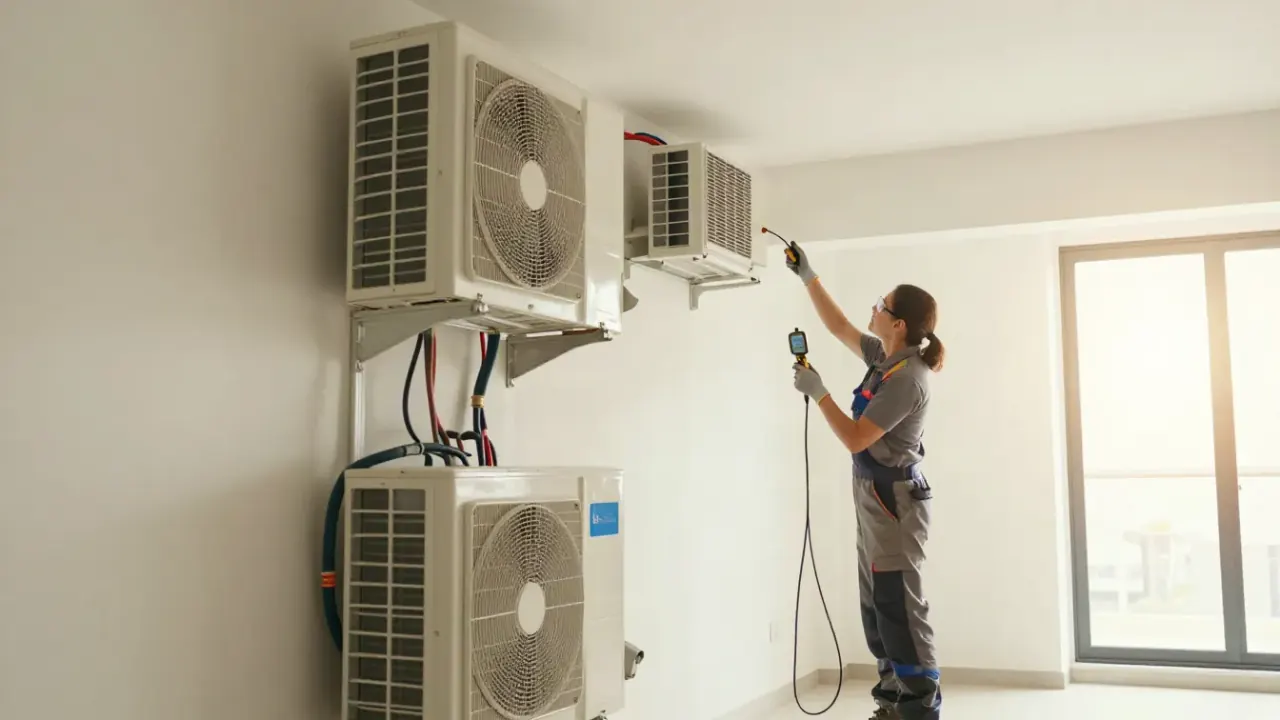
Ice on the evaporator coil starves the compressor of returning refrigerant and overheats it. We thaw, clean, and verify airflow and charge so the freeze does not repeat. Catching this early is often the difference between a $250 fix and a $2,000 compressor.
View service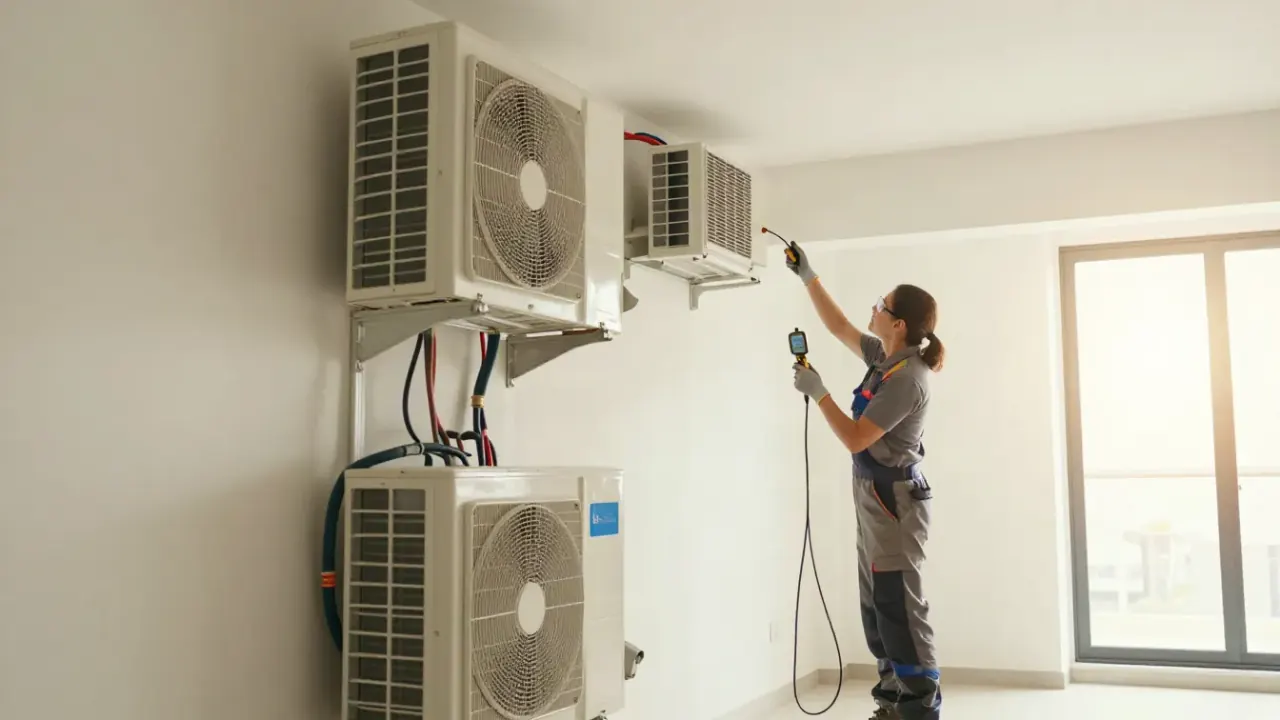
Call (281) 738-1427 or send us a message and we'll get back to you fast. We're open Monday through Friday, 8am to 6pm, and we take emergency calls for no-cool situations. If your unit quit on a weekend, leave a message and we'll call you back first thing.