Focused arrival windows
Useful updates and clear arrival timing.
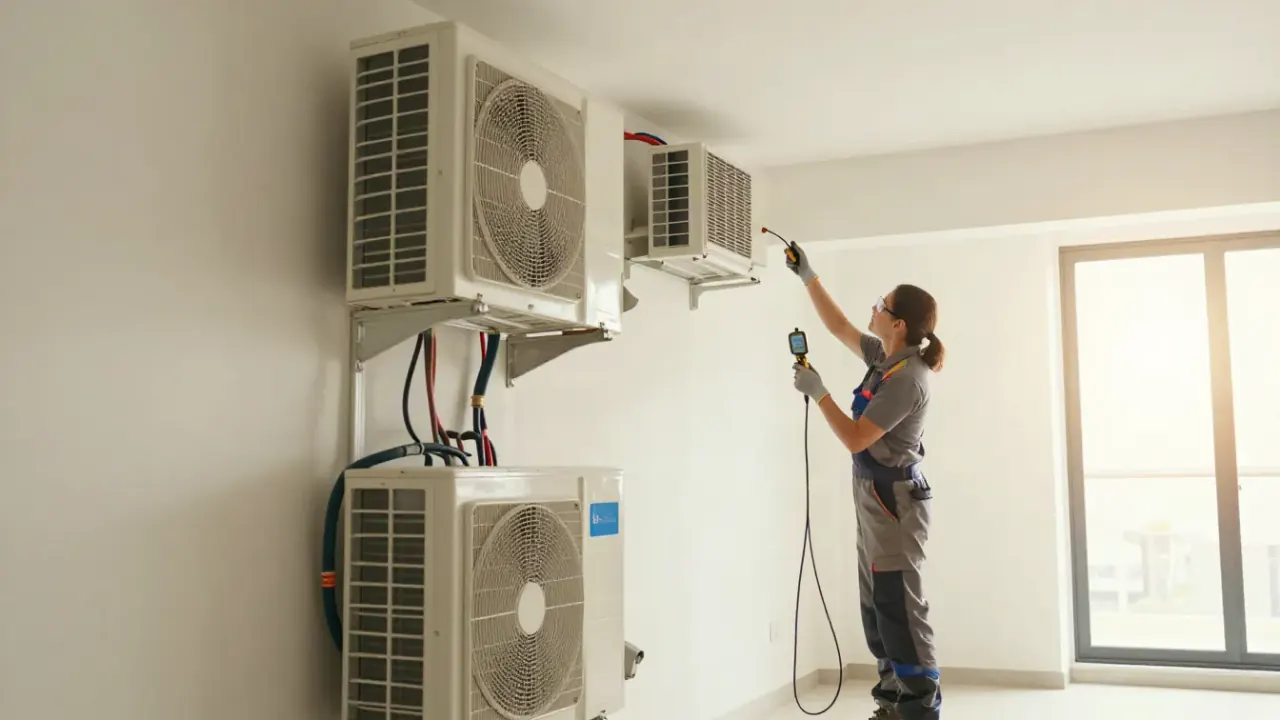
Mini Split Cleaning and Maintenance Rosenberg TX is what keeps a ductless system blowing cold instead of limping through August. We pull the blower wheel, flush the evaporator coil, clear the condensate drain line, and check refrigerant pressures on every visit. If you own a Mitsubishi Electric, Daikin, or LG head unit in Rosenberg, Texas, this is the service that protects the compressor and your electric bill.
Useful updates and clear arrival timing.
Review the approach and price before deciding.
Equipped vehicles and respectful cleanup.
Neighbors serving neighbors with follow-through.
Every cleaning visit covers the full mechanical service, not just a filter rinse. Filters, coil, blower wheel, drain line, and refrigerant pressures are all part of the job. If we find a failed part or a leak during the visit, we quote the repair before we start it, so there is never a surprise on the invoice.
We rinse reusable filters and check them for tears or collapse. If yours are past saving, we note the size so you can replace them, or we can supply a set. Dirty filters are the fastest way to freeze a coil in Rosenberg humidity.
The coil gets sprayed with coil cleaner and rinsed with a low-pressure pump, then combed straight with a fin comb. This is the step that restores heat transfer and drops your supply air temperature back where it belongs.
The blower wheel collects a sticky film that cuts airflow and makes the unit noisy. We remove it and wash it in a station. Most general HVAC companies skip this step, and it is the single biggest airflow gain on a dirty head.
We flush the drain line under pressure, clear the trap, and drop in drain pan tablets. This prevents the water leak indoors problem that sends so many Rosenberg homeowners looking for emergency service in July.
Manifold gauge set readings, amp draw with a clamp meter, capacitor test, and a supply-to-return air temperature split. You get the numbers in writing so you can compare performance next year.
Share what is happening and receive a clear next step from the local team.
Mini Split Cleaning and Maintenance Rosenberg TX is a scheduled service that restores a ductless system to factory airflow and cooling capacity. We remove the front panel and filters, pull the blower wheel, and wash the evaporator coil with a coil cleaning pump and fin comb so bent fins and matted dust stop choking the unit. The condensate drain line gets flushed and treated with drain pan tablets. Then we check refrigerant charge with a manifold gauge set, verify amp draw with a clamp meter, and confirm the head unit is holding the setpoint.
Rosenberg sits in Fort Bend County where summer heat indexes push past 105 degrees and humidity stays high from May through September. That combination grows biological film on coils faster than most homeowners expect, which is why a Rosenberg mini split cleaning service visit every spring pays for itself. If you have been searching for ductless mini split tune up near me, the honest answer is that one annual deep cleaning plus a filter rinse every 30 days is the schedule that keeps these systems alive.
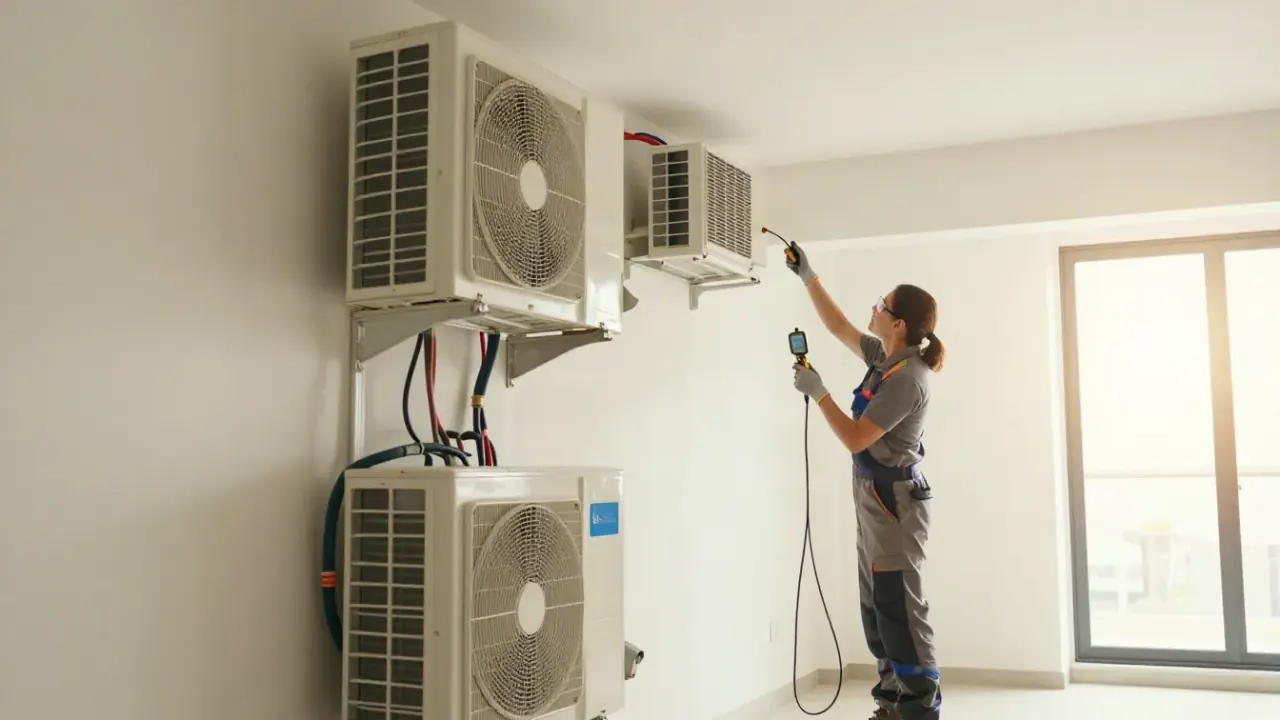
We start by running the unit in cooling and heating to record supply and return air temperatures, listen for noisy operation, and pull any error code fault from the remote or indoor board. This baseline tells us whether we are looking at a cleaning job or a repair. Takes about 15 minutes.
Filters come out first and get rinsed or flagged for replacement. The front panel and blower wheel come off next. On most Daikin and Fujitsu heads this is a 10-minute job with the right drivers. We bag the parts so nothing drops on your floor.
The evaporator coil gets washed with coil cleaner and a low-pressure pump, then combed straight with a fin comb. The blower wheel goes into a wash station because that is where the black biological film hides. This is the step that actually restores airflow, and it takes 30 to 45 minutes per head.
We flush the condensate drain line with pressure, clear the trap, and drop in drain pan tablets to stop algae regrowth. A clogged condensate drain line is the number one cause of water leak indoors calls in Rosenberg, and it is a five-minute fix when we catch it during maintenance.
With the unit back together, we check refrigerant pressures on a manifold gauge set, verify amp draw with a clamp meter, and confirm the setpoint holds. If we find a refrigerant leak or a weak capacitor, you get the finding and a price before we touch anything else.
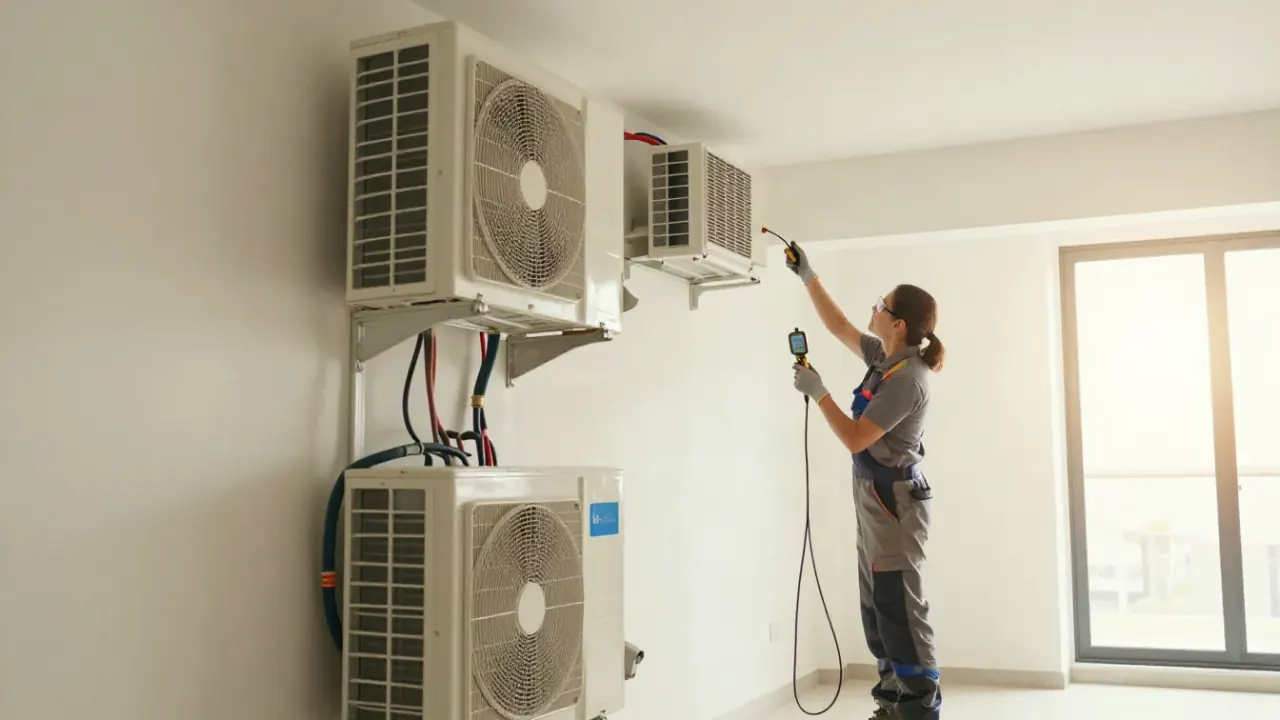
Reads high and low side refrigerant pressures so we can confirm charge is correct after cleaning and catch a slow leak before it kills the compressor.
Delivers coil cleaner and rinse water at low pressure so the evaporator fins get clean without bending. High pressure is how fins get destroyed.
Straightens bent aluminum fins on the evaporator coil. Matted or crushed fins block airflow just like dirt does.
Measures amp draw on the compressor and fan motor. We record before and after readings so you see the efficiency gain in numbers.
Electronic sniffing tool for finding refrigerant leaks at flare fittings, line sets, and coil joints when pressures read low.
Pulls a deep vacuum and verifies it holds before any recharge. Skipping this step is how moisture gets into a system and forms acid.
Pressure tests repaired line sets and flare fittings before recharge so we know the fix holds.
All refrigerant recovery, recharge, and leak repair follows EPA Section 608 rules. We recover refrigerant with a recovery machine rather than venting it, and we document charge by weight or subcooling on every recharge.
We measure air temperature at the return and at the supply vent. A 15 to 20 degree split tells us the coil is transferring heat properly. Anything less means airflow or charge trouble, and we chase it down before leaving.
Flare fittings on ductless line sets get tightened with a torque wrench to manufacturer spec. Over-tightening cracks flares and causes the slow leaks we find on so many Rosenberg systems.
Every cleaning includes a pressure flush of the condensate drain line plus drain pan tablets. This is the cheapest preventive step on the whole visit and it stops the water leak indoors calls cold.
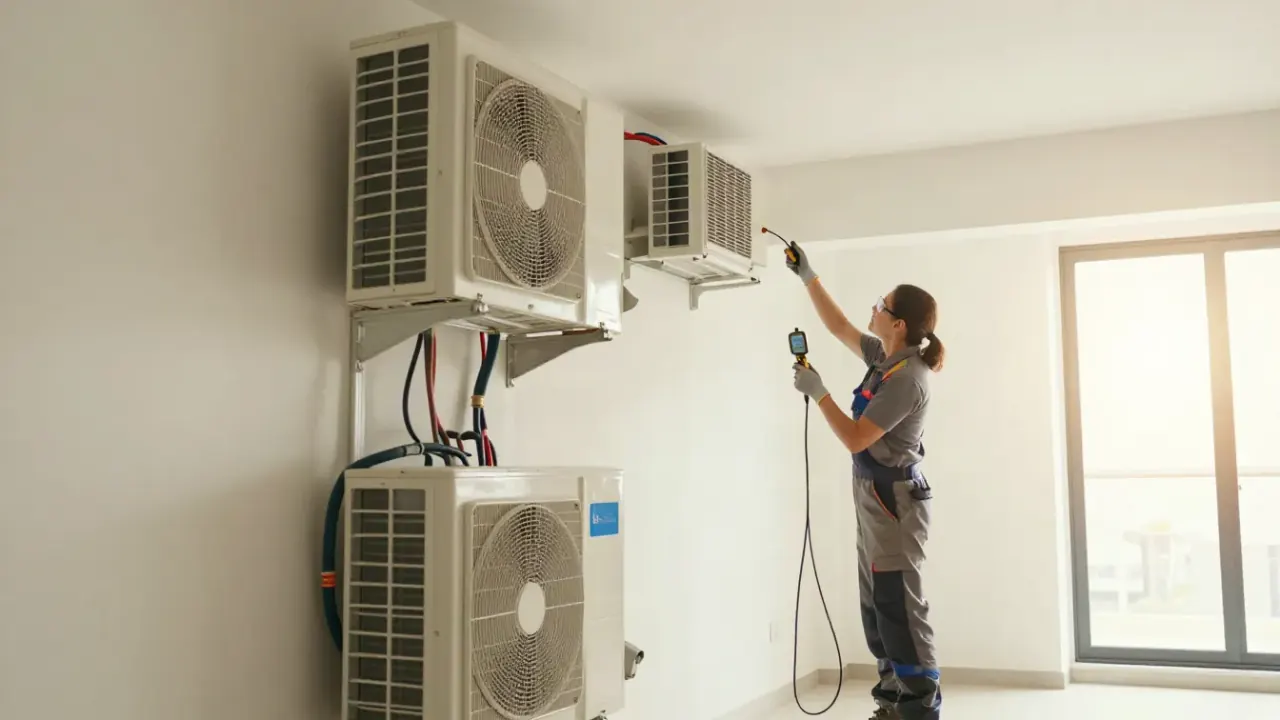
We book a full deep cleaning in March or April so the system enters summer at full capacity. Filters get rinsed, coil gets washed, drain line gets flushed, and pressures get verified. You start cooling season with a clean system, lower runtime, and no surprise breakdown in the first heat wave.
We inspect every head, clean what needs cleaning, and give you a written condition report on charge, drain routing, and electrical. You learn the real age and health of the system. No mystery equipment. You know what you own and what it needs going forward.
We test that zone's head, line set, and charge individually. Often the problem is a dirty coil or a flare fitting leak on that branch, not the outdoor unit. The zone comes back online without replacing the whole system, and we clean the other heads while we are there.
Plan members get first call on June and July slots. We run the full cleaning and log the readings so we can compare year over year. Priority scheduling, documented performance, and a system that keeps its rated capacity.
Rosenberg sits in Fort Bend County with a climate that punishes ductless equipment. Summer heat indexes above 105 degrees and humidity that hangs near 75 percent from May through September grow biological film on evaporator coils faster than most homeowners expect. Add the pollen load from spring and the dust from new construction in Briarwood Crossing and Brookewater, and a coil that was clean in March is matted by July. That is why we push a spring deep cleaning and a filter rinse every 30 days. Homes in The Oaks of Rosenberg and Kingdom Heights tend to be newer builds with multi-zone systems, and those need every head cleaned, not just the one that stopped cooling. If you have been looking for ductless AC tune up and coil cleaning in Rosenberg, Texas, the schedule that works here is one professional cleaning per year plus monthly filter service. We also see a lot of older single-zone installs near Fairpark Village where the line set insulation has degraded and the drain slope has settled, both of which we check on every visit.
Newer construction with multi-zone systems. Construction dust during the build phase loads coils fast, so first-year cleanings matter more here.
Larger homes running three and four zone systems. We clean every head on the visit because a dirty zone skews the whole system's performance.
Older ductless installs where line set insulation and drain slope often need attention alongside the cleaning.
Pollen-heavy tree cover in spring means filters here clog faster than average. We recommend 30-day rinses without exception.
Biological film grows on evaporator coils and in drain pans quickly. This is why drain pan tablets and a pressure drain flush are standard on every Rosenberg cleaning, not an add-on.
Systems run near continuous duty, which accelerates compressor wear when charge is off or coils are dirty. Spring cleaning before the peak is the single best protection.
Filters and blower wheels load up faster than in rural areas. Monthly filter rinses and annual blower wheel cleaning keep airflow where it needs to be.
Degraded pipe insulation causes condensation and efficiency loss. Settled drain lines back up. We check both on every visit and flag what needs repair.
A three-year-old Mitsubishi Electric head ran 14 hours a day and the room never dropped below 78 degrees. Filters were matted, the blower wheel was coated in black film, and supply air was only 9 degrees cooler than return.
After a full coil wash, blower wheel cleaning, and drain flush, supply air split hit 19 degrees. Runtime dropped to about 7 hours a day and the room held 72 degrees at the same setpoint.
Maintenance: Rinse filters every 30 days and book the annual deep cleaning each spring. Keep the outdoor unit clear of leaf debris.
Water was dripping down the wall from a second-floor Daikin head. The condensate drain line was fully blocked with algae and the drain pan had standing water. Drywall showed early staining.
We flushed the line, cleared the trap, and treated the pan with tablets. The leak stopped the same visit. We also corrected a slight drain slope issue that was contributing to the backup.
Maintenance: Drain pan tablets every cleaning and a pressure flush once a year. If you see moisture near the head, call before it reaches drywall.
A four-zone LG system had one zone blowing warm while the other three ran fine. Coils on all four heads were dirty, and the problem zone had a slow leak at a flare fitting that had dropped charge over two seasons.
We cleaned all four heads, repaired the flare with a torque wrench to spec, pulled a vacuum with the vacuum pump, and recharged with R-410A. All four zones now hold setpoint and amp draw is back in spec.
Maintenance: Annual cleaning on every zone plus a pressure check. Flare leaks recur when fittings are over-tightened, so use a torque wrench.
Most ductless failures in Rosenberg start as small maintenance issues. A coil that needs washing, a drain line that needs flushing, a charge that is slightly low. Catch them on a scheduled visit and you avoid the repair bill entirely.
The compressor runs continuously, amp draw climbs, and the electric bill jumps 20 to 30 percent. Left alone, the compressor overheats and fails. We test airflow and refrigerant pressure first. If the coil is matted, a deep cleaning restores capacity without a recharge. If charge is low, we find the leak with a leak detector, repair it, and recharge to spec.
A clogged condensate drain line backs water into the drain pan and onto your drywall. Mold and ceiling stains follow within days. We flush the drain line, clear the trap, and treat the pan with tablets. Most water leak calls are resolved in under an hour once we get to the line. We also check the drain slope on installs to prevent repeat clogs.
A frozen evaporator coil blocks airflow completely and can send liquid refrigerant back to the compressor, which is how compressors die. We thaw the coil, clean it, and verify charge with a manifold gauge set. If a refrigerant leak is the cause, we repair the flare fitting or line set, pull a vacuum with the vacuum pump, and recharge.
A dirty or unbalanced blower wheel wears the motor bearing. What starts as a rattle becomes a motor replacement. We pull the blower wheel, wash it, and check balance and bearing play. Most noisy mini split complaints quiet down after cleaning without any parts. If the bearing is gone, we quote the motor.
$180 - $850 depending on zone count and buildup
Typical 2026 pricing in Rosenberg runs $180 to $280 for a single-zone deep cleaning and $120 to $160 per additional head on multi-zone systems. A basic filter-and-coil rinse without blower wheel removal sits at the low end. Deep cleaning with full disassembly, drain flush, and pressure verification sits at the high end. If we find a refrigerant leak or a failed capacitor during the visit, we quote the repair before starting it. Our annual ductless AC maintenance plan Rosenberg TX customers use bundles the cleaning and priority scheduling at a lower per-visit cost.
A $200 cleaning that restores airflow and drops runtime pays for itself in a couple of summer months on the electric bill. It also pushes back the compressor replacement that costs several thousand dollars. That is the math.
Each indoor head is its own cleaning job. A single-zone system takes 90 minutes to two hours. A four-zone system takes most of a day, and pricing scales per head.
A lightly soiled coil rinses quickly. A coil with years of biological film and a matted blower wheel takes longer to wash and comb. Heavy buildup is the most common reason a quote moves to the top of the range.
Heads mounted high on a vaulted wall or above furniture need ladders and drop cloths. Difficult access adds labor time, which is reflected in the quote before we start.
A refrigerant leak, a weak capacitor, or a failing blower motor found during the cleaning is quoted separately. You approve it before we do the work. Cleaning itself never includes parts.
Plan members pay less per cleaning and get priority scheduling in June and July. If you have multiple systems, the plan is usually the cheaper route over a two-year window.
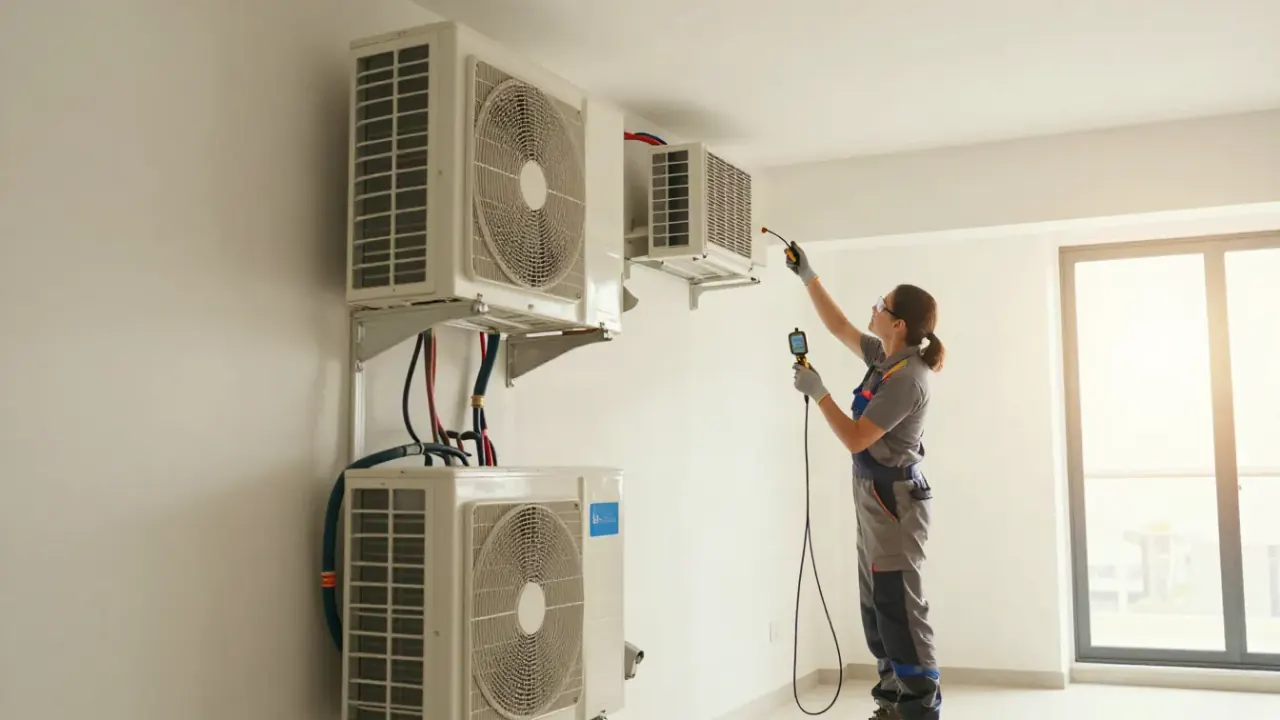
Our technicians hold EPA Section 608 certification for refrigerant handling and NATE certification on ductless and ducted systems. We work under a Texas HVAC contractor license and TDLR license, carry OSHA safety training, and install to AHRI certification standards. That matters on a cleaning visit because we are not just washing plastic. We are reading pressures, checking flare fittings and pipe insulation, and catching the small faults that turn into compressor failure. We service Mitsubishi Electric, Daikin, Fujitsu, LG, Samsung, Carrier, Trane, Bosch, Gree, and Pioneer equipment across Rosenberg and Fort Bend County, and we keep R-410A and R-32 refrigerant on the truck.
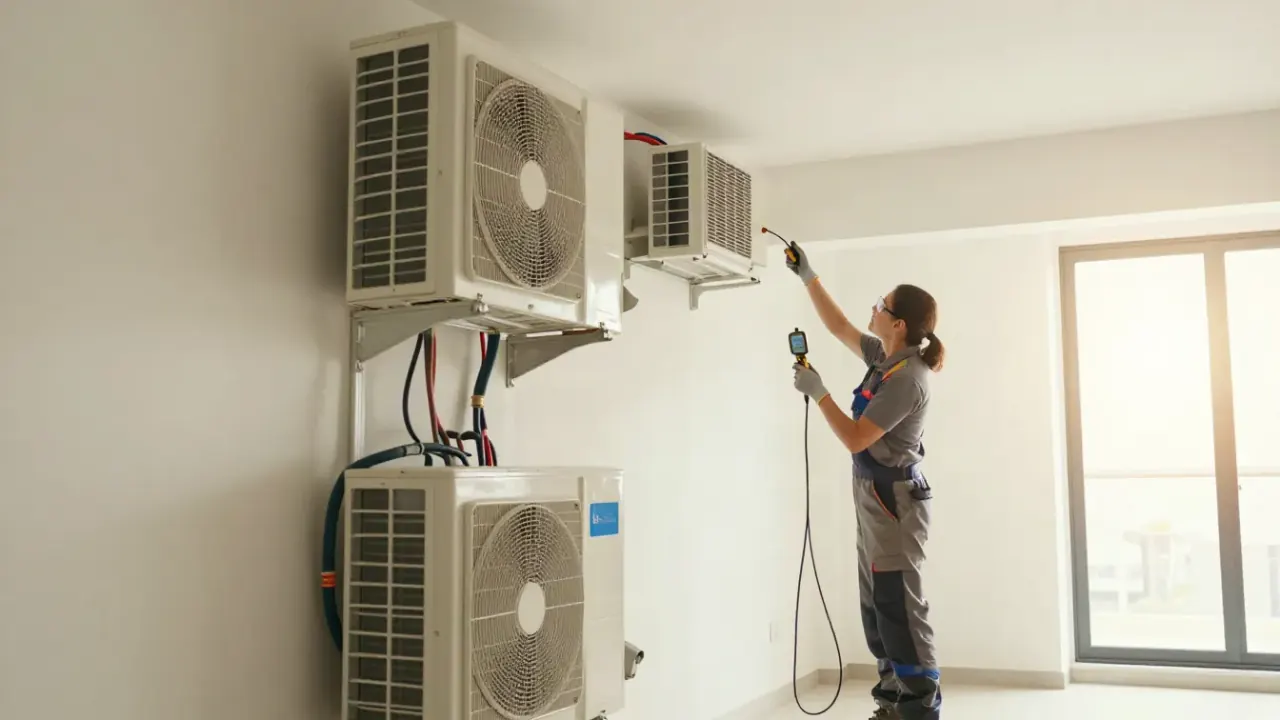
Our bedroom unit had been running nonstop and the room never got below 78. The technician pulled the blower wheel, washed the coil, and flushed the drain line. Supply air dropped 18 degrees by the time he left. He also showed me the amp draw readings before and after. Worth every dollar.
We have three Daikin heads and one had stopped cooling. They cleaned all three, found a slow leak at a flare fitting on the problem zone, and repaired it the same visit. No upsell, no runaround. They explained the annual plan and we signed up on the spot.
I manage six rental units with ductless systems and use them for every cleaning. They show up when they say, the invoice matches the quote, and the tenants have stopped calling about water dripping down the wall. The drain line flush alone saved me two service calls this year.
Most single-zone cleanings in Rosenberg run $180 to $280, and multi-zone systems price at roughly $120 to $160 per additional head. Deep cleaning with blower wheel removal sits at the top of that range. If we find a refrigerant leak or a failed part, we quote the repair before starting. Typical 2026 pricing in this area has stayed in that band.
Clean the filters every 30 days and book a professional deep cleaning once a year. Rosenberg humidity and pollen load mean coils grow film faster than in drier climates, so spring is the right slot before the cooling season starts. Homes with pets or anyone running the unit year-round should consider a second visit in fall.
Yes. Our annual plan covers one full deep cleaning per system, filter rinse reminders, and priority scheduling ahead of peak summer. Members also get first access to same-day slots in June and July. Call (281) 738-1427 and we will set the plan up on your first visit.
A ductless AC tune up and coil cleaning in Rosenberg, Texas includes filter service, evaporator coil wash, blower wheel cleaning, condensate drain line flush, drain pan tablets, refrigerant pressure check with a manifold gauge set, amp draw reading, and a supply-to-return air temperature test. You get the readings in writing so you can track performance year over year.
Not seeing your question? Our local team can help you understand urgency, scheduling and what to expect.
Ask the local team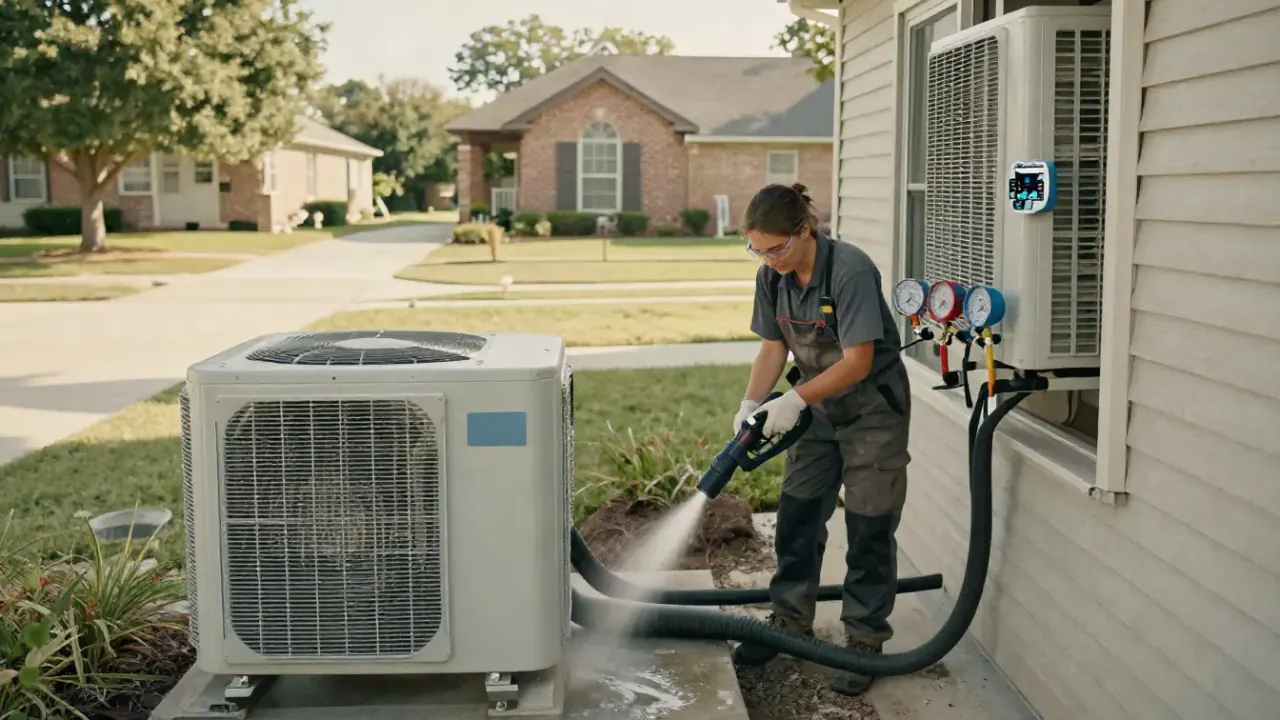
Nine times out of ten a Rosenberg mini split not cooling call traces back to a dirty coil or low charge. We diagnose airflow and refrigerant pressure on the same visit, so you are not paying twice for a cleaning and a repair.
View service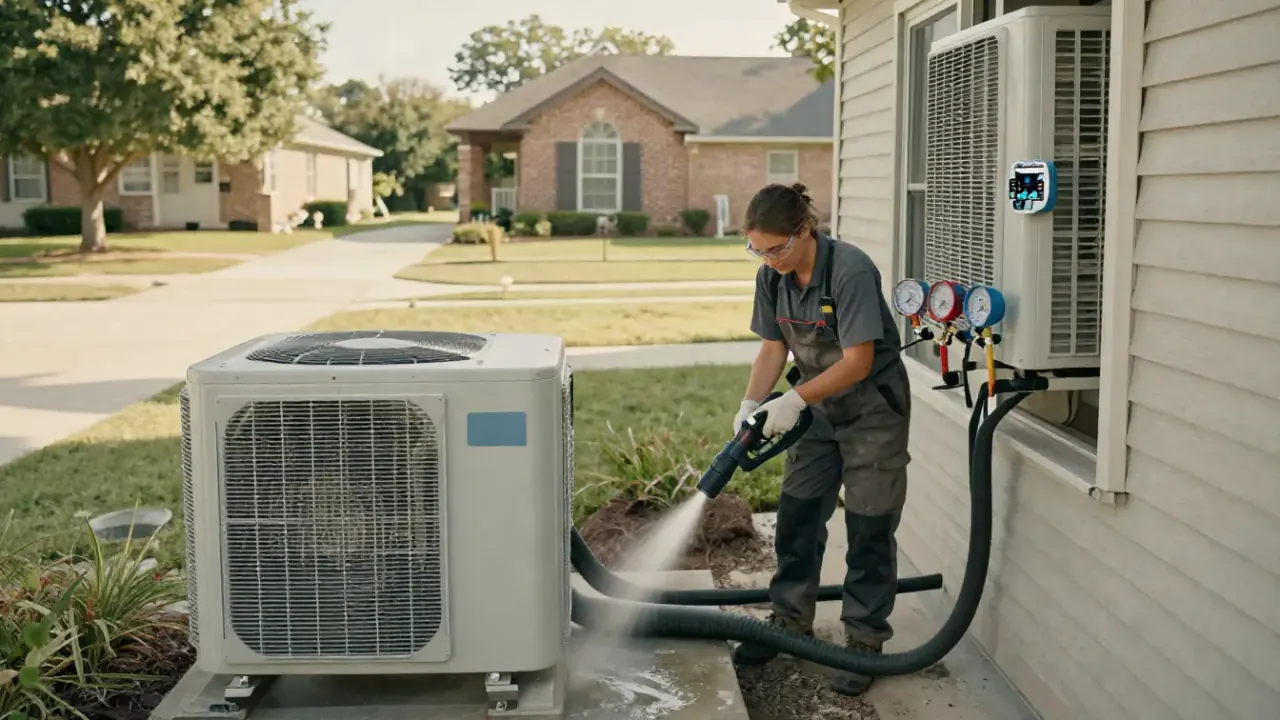
Heat mode failures in Rosenberg often come from a reversing valve fault or a coil that iced over during a cold snap. Our tune up checks heating operation and defrost cycles so the problem is caught before winter.
View service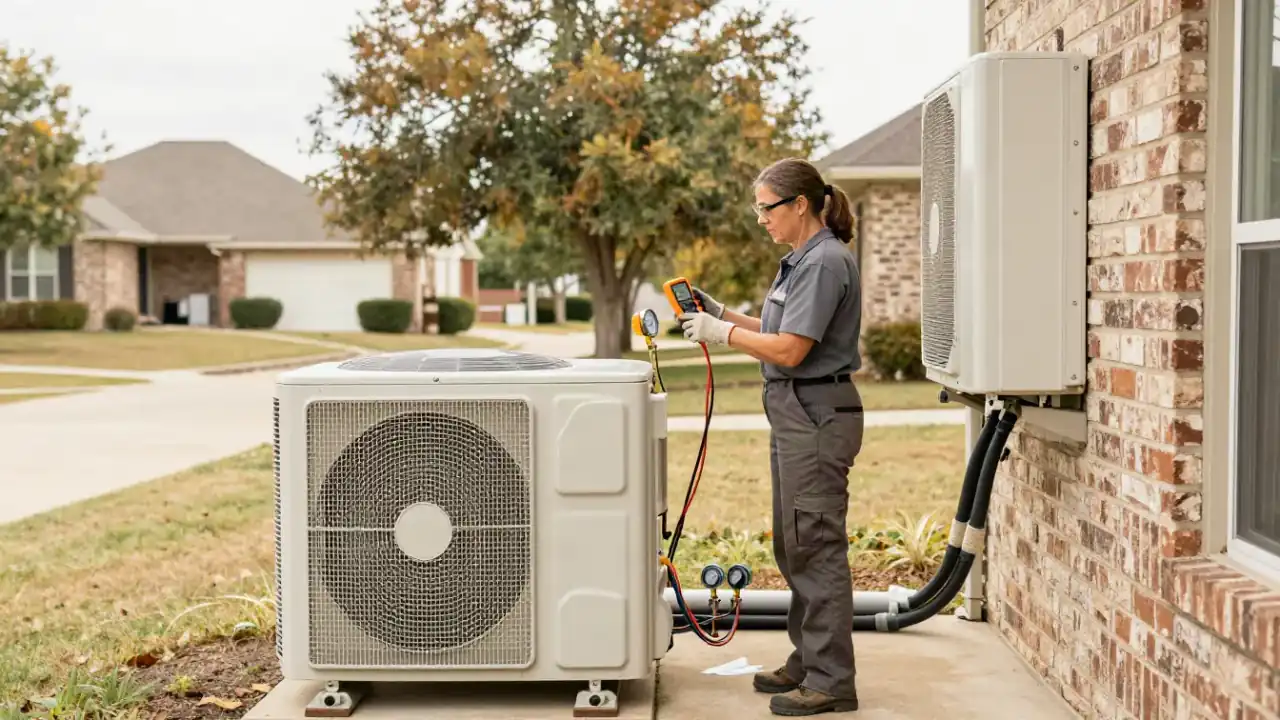
If pressures read low during a cleaning, we break out the leak detector and nitrogen regulator to find the source. Flare fittings and line sets are the usual suspects. We repair, evacuate with a vacuum pump, and recharge with R-410A or R-32.
View serviceIce buildup on the evaporator coil means restricted airflow or low refrigerant. A deep cleaning clears the airflow side; if charge is the cause, we find and fix the leak. Running a frozen unit is how compressors die.
View service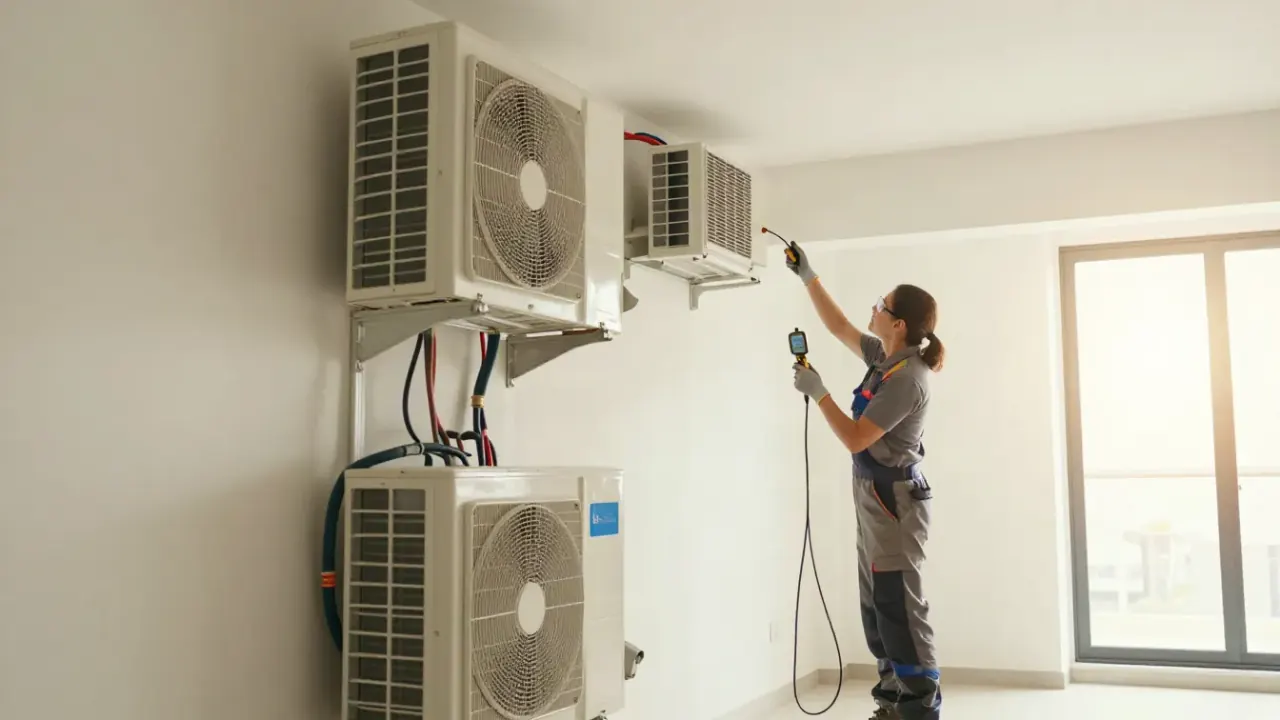
Call (281) 738-1427 or send us a message and we'll get back to you fast. We're open Monday through Friday, 8am to 6pm, and we take emergency calls for no-cool situations. If your unit quit on a weekend, leave a message and we'll call you back first thing.