Focused arrival windows
Useful updates and clear arrival timing.
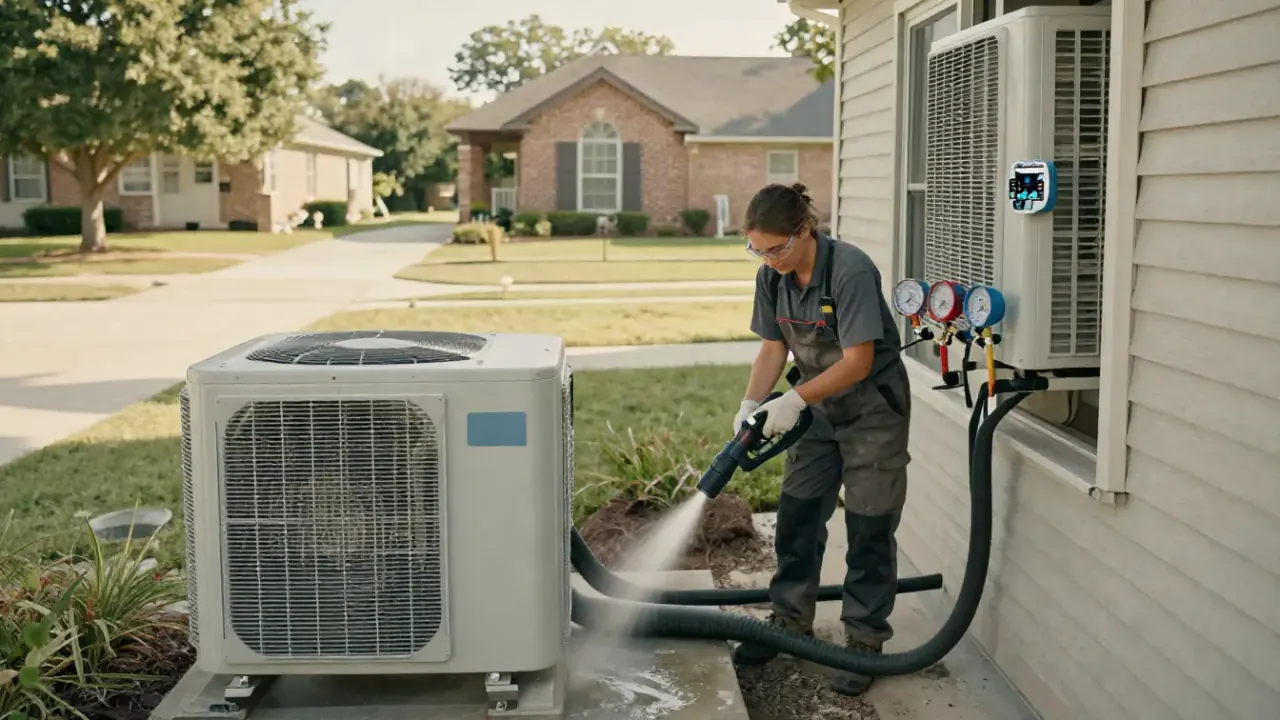
Frozen Coil and Ice Buildup Repair Rosenberg TX starts with a full thaw and a real diagnosis, not just a hair dryer and a hope. If your ductless head is caked in ice, blowing warm air, or dripping water down the wall, we find out why the coil froze and fix the cause. Same-day mini split frozen coil service near me Rosenberg is what we do across Fort Bend County.
Useful updates and clear arrival timing.
Review the approach and price before deciding.
Equipped vehicles and respectful cleanup.
Neighbors serving neighbors with follow-through.
Every frozen coil call includes a full thaw, a real diagnosis, and a repair of the cause. Here is what is covered in the standard service, and what gets quoted separately if we find it.
We shut the system down and thaw the coil safely, protecting the fins and the drain pan. Meltwater is contained with drop cloths. A fully iced head takes 45 to 90 minutes to clear, and we do not rush it with heat that can warp the coil.
We connect a manifold gauge set and compare readings to the manufacturer spec. If the charge is low, we leak-test with nitrogen and an electronic leak detector to find where it is going. You see the numbers before we add anything.
We measure blower amp draw with a clamp meter, inspect the blower wheel, and check the filter and return air path. Restricted airflow is the second most common cause of a frozen coil, and it is often the cheapest to fix.
We flush the condensate drain line, clean the drain pan, and add drain pan tablets to keep it clear. A blocked drain is what turns a frozen coil into a water damage claim, so we treat it as part of the repair, not an add-on.
We clean the evaporator coil with coil cleaner and a fin comb, removing the dust and biological growth that insulates the coil and holds ice. A clean coil moves air the way it was designed to, which is the best prevention against a repeat freeze.
We run the unit 30 to 45 minutes and confirm the coil stays dry, the supply air is 55 to 60 degrees, and the drain is flowing. You get the readings and a filter schedule before we pack up. If the coil freezes again on the test run, we keep working.
Share what is happening and receive a clear next step from the local team.
Frozen Coil and Ice Buildup Repair Rosenberg TX is the process of safely thawing a blocked evaporator coil, finding the reason it froze, and correcting it so the system runs dry and cold again. Ice on a mini split coil is never the problem itself. It is a symptom of low refrigerant, restricted airflow, a failing blower, or a clogged condensate drain line. We recover the refrigerant, pressure-test the line set, clean the coil, and verify superheat and subcooling before we call it done.
Rosenberg summers push ductless systems hard, and a mini split frozen evaporator coil repair Rosenberg TX call usually lands in July or August when a unit has been short-cycling for weeks. Others come in January, when a heat pump in defrost ices over and stops heating. If you are searching mini split ice buildup repair near me, the fix is the same: thaw it, test it, repair the root cause. We serve ZIP codes 77471 and 77469 and the neighborhoods around them.
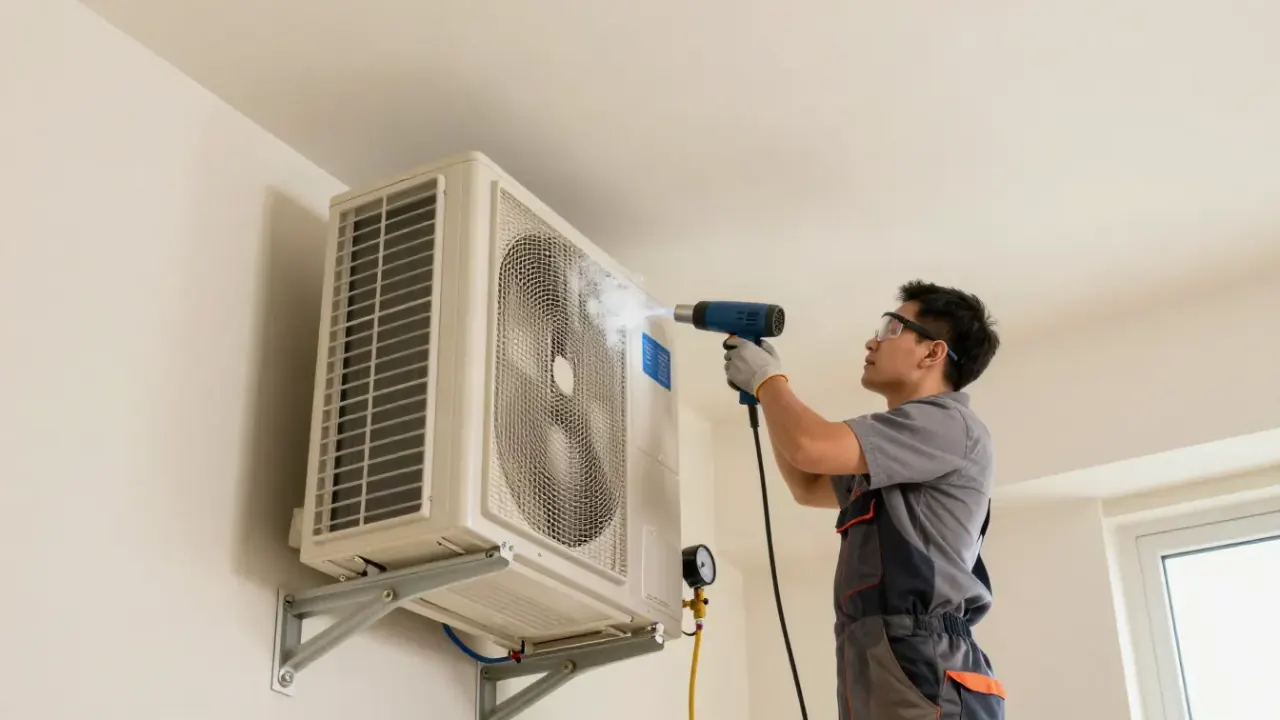
We ask three questions: is the indoor head icing over, is it blowing warm, and is water dripping? That tells us whether to bring recovery equipment or start with airflow. You get a two-hour arrival window and a call when the tech is 20 minutes out. No waiting all day.
We shut the system down and let the coil thaw safely, using a fin comb and low-pressure air rather than a heat gun that can warp fins or crack a brazed joint. Thawing a fully iced head takes 45 to 90 minutes. We lay drop cloths so meltwater does not stain carpet or hardwood.
Once the coil is clear we hook up a manifold gauge set and a micron gauge, then check static pressure, blower amp draw, and return air temperature. Nine times out of ten the answer is a refrigerant leak, a dirty coil, or a blower that has slowed down. We show you the readings.
We locate leaks with an electronic leak detector, repair the flare fitting or line set, pull a deep vacuum to 500 microns, and weigh in R-410A or R-32 refrigerant to the nameplate charge. A leaking Schrader core or loose flare is a common, quick fix. A failed coil gets a quote before we touch it.
We run the unit 30 to 45 minutes, confirm the coil stays dry, check superheat and subcooling against spec, and test the condensate drain with a gallon of water. You get the readings in writing, plus a filter and coil cleaning schedule. Then we haul off the drop cloths.
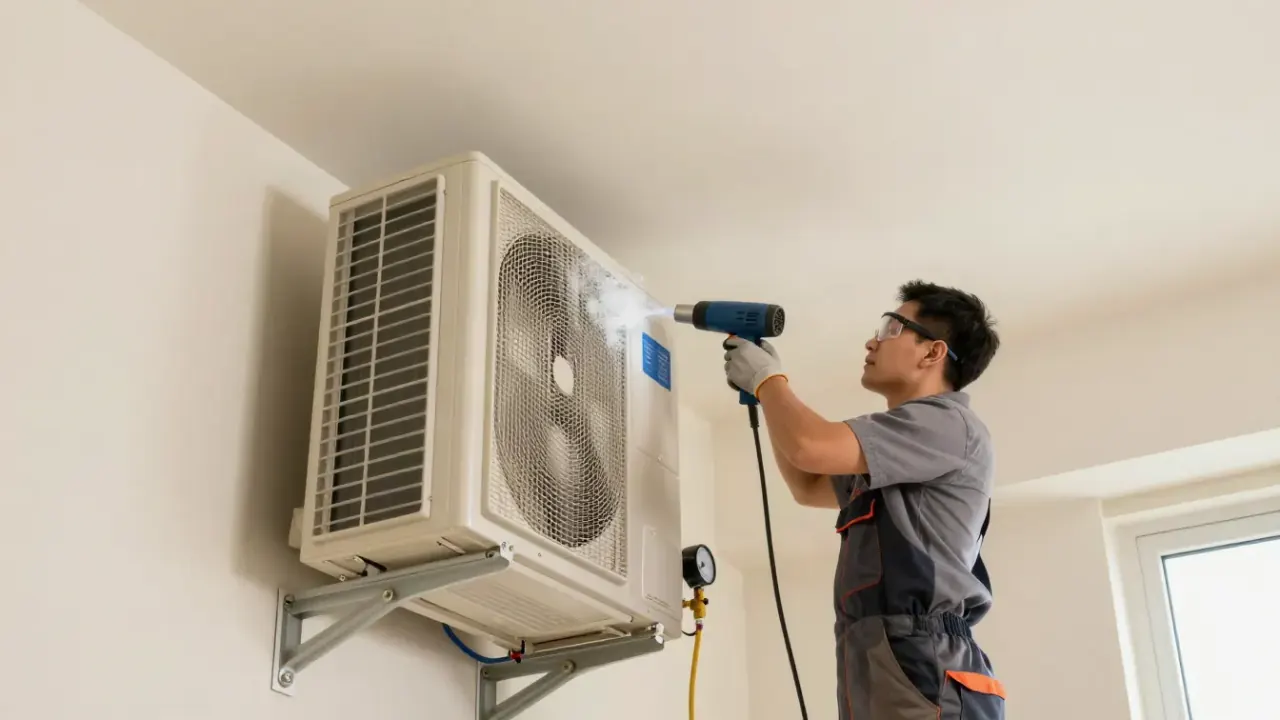
Used to read suction and liquid line pressures and compare them to the manufacturer spec. This is how we tell a low charge from an airflow problem before we add refrigerant.
Measures the vacuum depth after a leak repair. We pull to 500 microns and hold it to confirm the system is dry and leak-free before recharging.
Finds refrigerant leaks at flare fittings, Schrader cores, and brazed joints. It pinpoints the leak so we repair the right spot instead of guessing.
Measures blower and compressor amp draw. A blower pulling low amps is slowing down, which restricts airflow and freezes the coil.
Straightens bent coil fins so air can pass through. Bent fins are a common cause of restricted airflow on units that have never been cleaned.
Recovers R-410A and R-32 refrigerant legally before any repair. Required by EPA Section 608 rules and standard on every truck we run.
Pressurizes the line set with dry nitrogen for leak testing. It lets us hold pressure for 30 minutes and confirm the repair before we evacuate.
We measure both after every recharge and compare them to the manufacturer's target. If superheat is too low, the coil will freeze again. This is the check that separates a real repair from a top-off.
After any leak repair, we evacuate the system to 500 microns and hold it. Moisture left in the line set freezes at the metering device and causes the exact problem you called us about.
We charge refrigerant by weight to the nameplate specification rather than by gauge pressure alone. This is the only way to guarantee the correct charge on a ductless system with a long line set.
We tighten flare nuts to the manufacturer's torque spec with a torque wrench. Over-tightened flares crack and leak, which is one of the most common causes of a frozen coil we see.
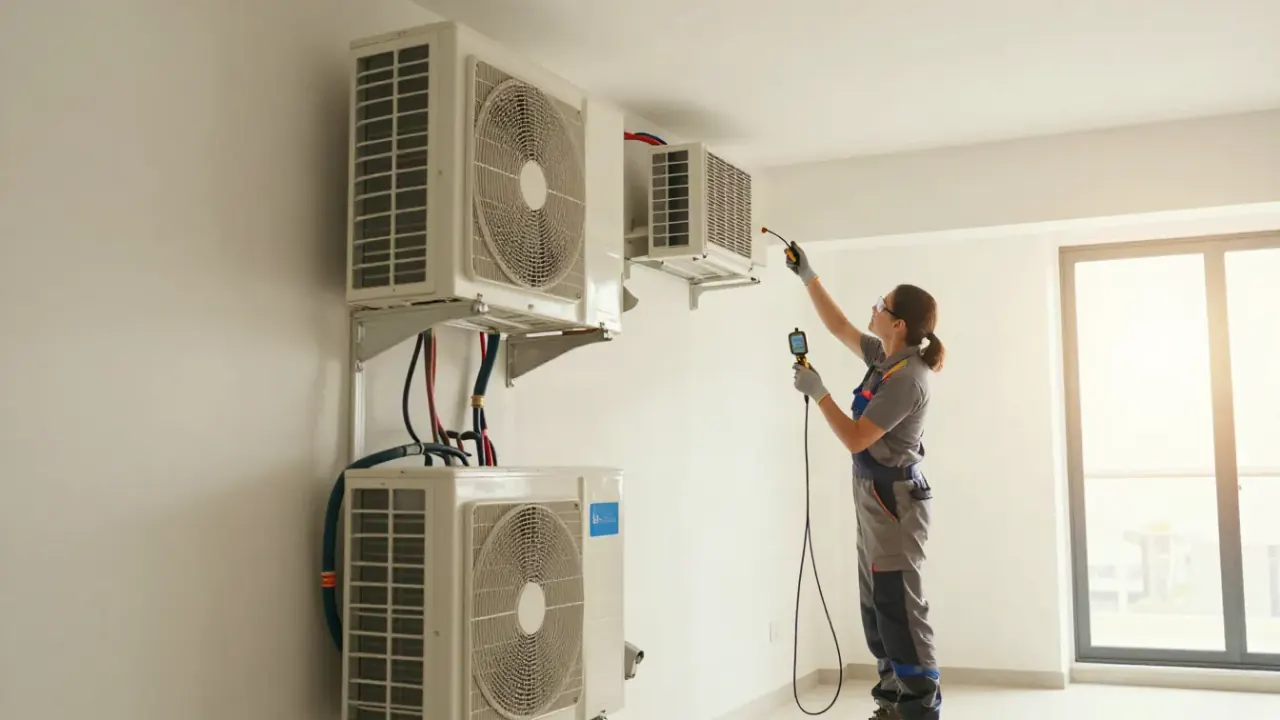
This is the classic Rosenberg summer freeze. We thaw the coil, check the charge and airflow, and repair the cause, usually a leak or a dirty blower. Same-day service is available if you call before 2 p.m. Cold air restored within two to four hours, with the coil staying dry through the cooling season.
We diagnose the defrost cycle, check the outdoor sensor and reversing valve, and repair the part that is keeping the unit in defrost. We also verify the indoor coil is not frozen from the heating cycle. Heat restored the same day in most cases, with the defrost cycle terminating correctly.
We clear the condensate drain line, flush the drain pan, and thaw the frozen coil that is producing the meltwater. We check the drain pitch and add tablets to keep it clear. No more dripping, no water damage, and a drain that stays open through the humid months.
Recurring freezes mean the cause was never found. We do a full leak-down test, weigh in the correct charge, and check the blower and coil. If a part is failing, we quote it before replacing it. The freeze cycle stops, the compressor is protected, and your power bill drops back to normal.
Rosenberg sits in Fort Bend County, where summer humidity runs high and cooling season starts in April and runs into October. That long, wet season is hard on ductless coils. A coil that stays wet grows biological growth that insulates the fins, restricts airflow, and freezes. Add new construction dust from neighborhoods like Brookewater and Kingdom Heights, and you get clogged filters and dirty blowers within the first year. Winter brings the opposite problem: heat pumps in defrost mode ice over the outdoor coil, and a failed sensor keeps them there. We size our repair approach to the season. In summer, we focus on charge, airflow, and drain lines. In winter, we focus on the defrost cycle and the reversing valve. If you need emergency frozen coil repair Rosenberg TX in the middle of a heat wave, we keep R-410A and recovery equipment on the truck so we are not waiting on a supply house. We work in ZIP codes 77471 and 77469 and the surrounding communities, and we know the local housing stock from new builds to older homes with original line sets.
Newer construction with tight line sets and long refrigerant runs. Flare fittings on these installs are a common leak point that leads to a frozen coil.
Established homes where original mini splits are now 10 to 15 years old. Blower motors slow down with age, which restricts airflow and freezes the coil.
New builds with construction dust still working through the filters. We see clogged coils and frozen heads in the first cooling season after move-in.
Older housing stock with mature trees. Cottonwood and pollen load the outdoor coil, which raises head pressure and can contribute to indoor freeze-ups.
Coils stay wet longer, which grows biological growth on the fins. That growth insulates the coil and restricts airflow, a leading cause of freeze-ups in Rosenberg.
Drywall dust and construction debris clog filters and blower wheels in the first year. We clean the blower and coil as part of the repair, not as an afterthought.
Heat pumps run in defrost mode in January and February. A failed outdoor sensor or board keeps the unit in defrost too long and ices the coil.
Longer runs hold more charge and are more sensitive to small leaks. We weigh in the charge to the nameplate spec rather than charging by gauge pressure.
A two-year-old mini split in a Briarwood Crossing bedroom was blowing warm air and the indoor coil was a solid block of ice. The homeowner had been running it on high for three weeks trying to cool the room. Power bills were up about 20 percent.
We thawed the coil, found a leaking flare fitting on the line set, repaired it, pulled a deep vacuum, and weighed in the correct R-410A charge. Supply air dropped to 57 degrees within two hours. The coil stayed dry on a 45-minute verification run.
Maintenance: We set the homeowner up on a twice-a-year filter change and an annual coil cleaning. Flare fittings should be checked at every maintenance visit, especially on newer installs.
A homeowner in The Oaks of Rosenberg called because water was running down the wall from the indoor unit. The condensate drain line was clogged and the coil had frozen solid. Paint and baseboard on one wall were already damaged.
We cleared the drain line, flushed the pan, and thawed the coil. The blower wheel was packed with dust, so we cleaned it and the coil. Amp draw came back to spec and the drain flowed a full gallon without backing up. No more dripping.
Maintenance: Drain pan tablets every three months and a filter check monthly. In Rosenberg humidity, a drain line that is not flushed annually will clog again.
A Fairpark Village homeowner had the same mini split freeze up three times in one summer. Two previous techs had topped off the refrigerant without finding the leak. The coil was iced over again within two weeks each time.
We recovered the remaining charge, pressure-tested with nitrogen, and found a leaking Schrader core and a cracked flare nut. We replaced both, evacuated to 500 microns, and weighed in the charge. Superheat and subcooling both landed in spec. No freeze-ups since.
Maintenance: We recommend a leak check at every annual maintenance visit. A system that has leaked once is more likely to leak again, and catching it early prevents another freeze.
Ice on a mini split head is the visible symptom. These are the underlying problems we find and fix on frozen coil calls across Rosenberg.
The system runs constantly without cooling, driving up your power bill and wearing out the compressor. Left alone, the ice gets thicker and eventually blocks airflow completely. We thaw the coil, then test refrigerant charge and airflow to find why it froze. Most of these turn out to be a slow leak or a blower that has lost speed. We repair the cause and verify the coil stays dry on a 45-minute run.
Meltwater overflows the drain pan and runs down the wall or into the ceiling. Drywall, paint, and baseboards can be damaged within a day, and mold follows in Rosenberg humidity. We clear the condensate drain line, flush the pan, and check the drain pitch. Then we thaw the coil and fix the freeze so it stops producing more meltwater than the drain can handle. Drain pan tablets go in before we leave.
A coil that keeps icing over means the root cause was never fixed. Each cycle pushes liquid refrigerant back to the compressor, which is the most expensive part in the system. We do a full leak-down test, weigh in the correct charge, and verify superheat and subcooling against the nameplate. If the coil or blower is failing, we quote the part. Recurring freezes stop when the actual cause is corrected.
A heat pump stuck in defrost stops heating and can ice over the outdoor coil. In January, that means a cold house and a system running nonstop without results. We check the defrost board, the reversing valve, and the outdoor sensor. A failed sensor or board keeps the unit in defrost too long. We replace the failed part and confirm the defrost cycle terminates correctly.
$180 - $950 depending on scope
Typical 2026 pricing in the Rosenberg area runs $180 to $320 for a thaw and diagnostic, and $450 to $950 if we find and repair a refrigerant leak with a recharge. A failed evaporator coil or blower motor is a larger job and gets quoted separately. The diagnostic is what tells you which one you are dealing with, and we give you the number before we start. There are no surprise charges at the end of the visit.
A frozen coil repair costs a fraction of a compressor replacement, which runs $900 to $1,800. Fixing the cause now protects the most expensive part in your system and drops your power bill back to normal.
A lightly frosted coil thaws in 30 minutes. A coil that has been iced over for weeks can take 90 minutes or more and may have damaged the blower or compressor. The longer it has been frozen, the more the diagnostic has to cover.
A leaking Schrader core or flare fitting is a quick repair. A leak inside the wall or in a brazed joint on a long line set takes more labor and may require opening drywall. We locate the leak before quoting the repair.
R-410A and R-32 are priced differently, and a system with a long line set holds more charge. We weigh in the exact amount the nameplate calls for, so you pay for what the system needs, not a flat top-off.
A dirty blower wheel can be cleaned. A blower motor that has lost speed needs replacement. A coil that has been frozen repeatedly can develop cracks. We test amp draw and inspect the coil before recommending a part.
A simple clog clears with a flush. A drain line with a broken pitch or a cracked pan needs more work. We check the whole drain path because a blocked drain is what turns a freeze into water damage.
A single-zone wall head is straightforward. A multi-zone system with a branch box takes longer to test every zone. Ceiling cassettes and concealed duct units also take more time to access and clean.
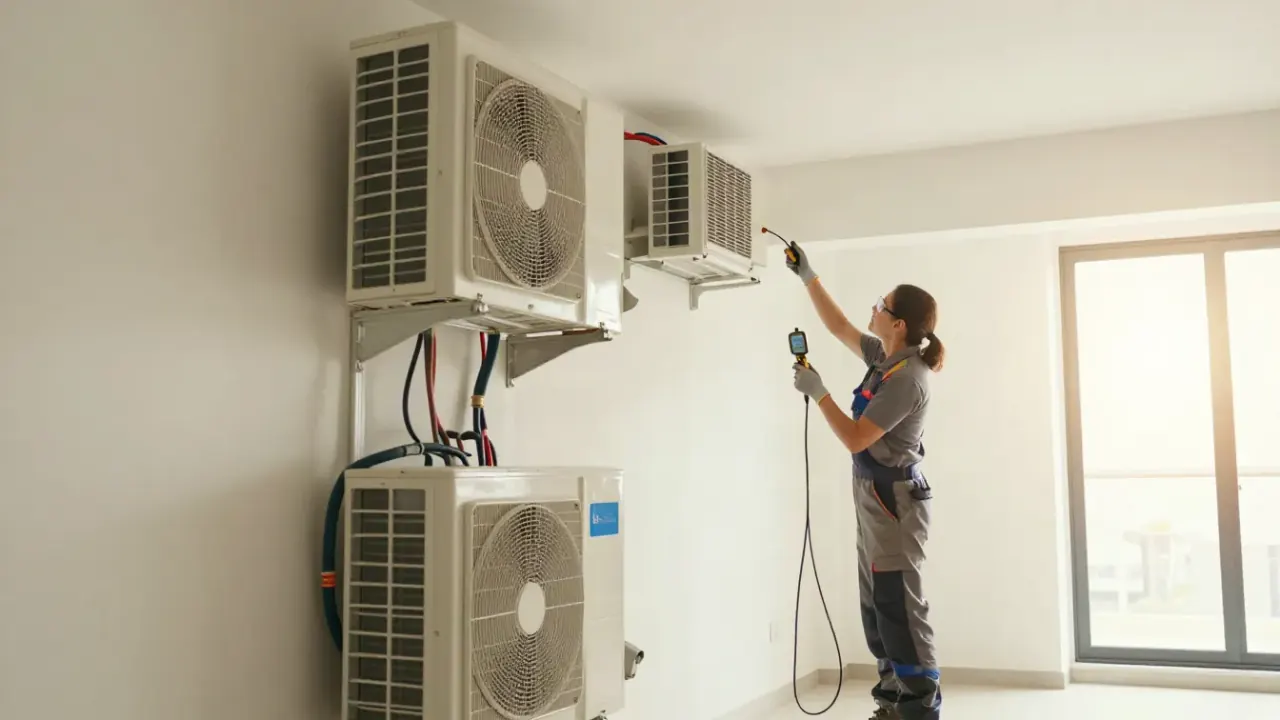
Our technicians hold EPA Section 608 certification and NATE certification, and we work under a Texas HVAC contractor license and TDLR license. That matters because refrigerant handling is regulated, and a tech who cannot legally recover refrigerant has no business opening your system. We carry AHRI certification on the equipment we install and service, and every job follows OSHA safety training standards. We work on Mitsubishi Electric, Daikin, Fujitsu, LG, Samsung, Carrier, Trane, Bosch, Gree, and Pioneer systems, so we know the flare fittings, error codes, and service quirks of each brand before we arrive.
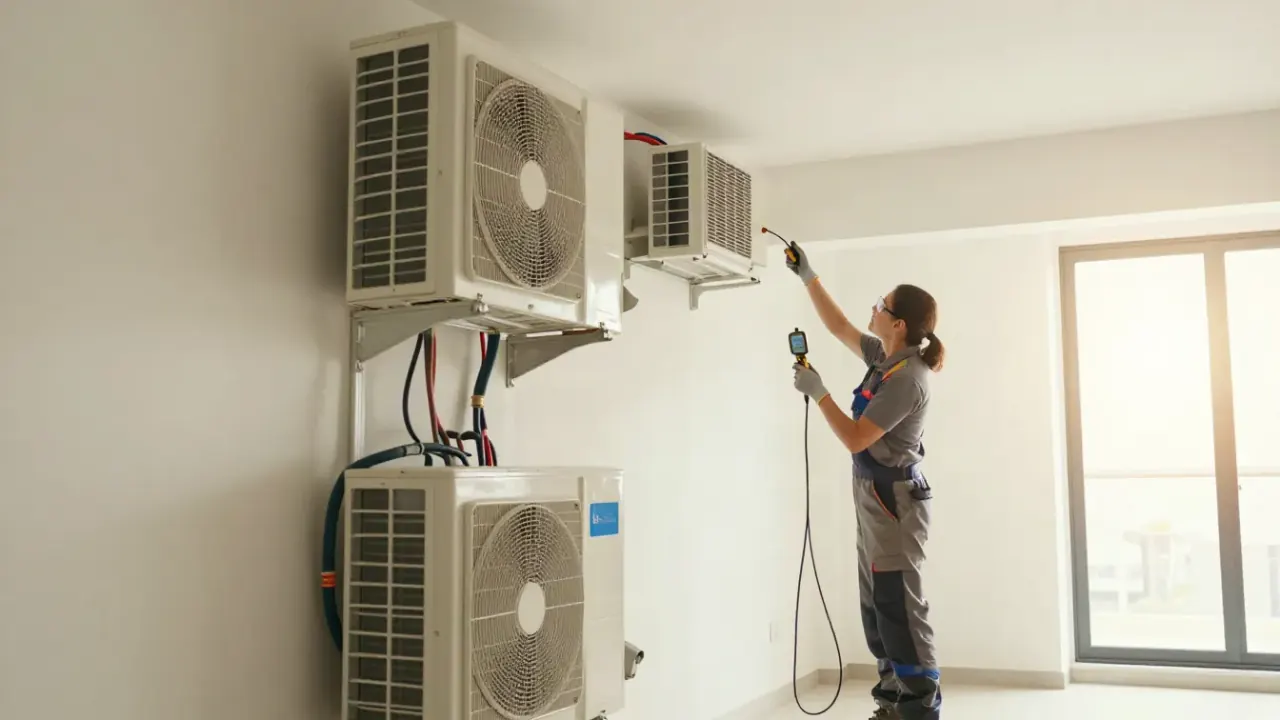
Our upstairs mini split was blowing warm and the whole coil was a block of ice. They came out the same afternoon, thawed it, and found a leaking flare fitting. Recharged the system and it has been blowing cold for two months. They showed me the gauge readings before and after, which I appreciated.
Water was dripping down my wall from the indoor unit and I panicked. Turned out the drain line was clogged and the coil had frozen solid. They cleared the line, thawed the coil, and cleaned the blower wheel while they were in there. No more dripping and the air is colder than it has been in a year.
I manage several rentals and had two units freeze up in the same week. They handled both, diagnosed a low charge on one and a dirty coil on the other, and gave me straight pricing before starting. Both have run clean through the summer. I have them on my list for maintenance now.
The most common cause is low refrigerant from a slow leak, followed by restricted airflow from a dirty filter or blower. In Rosenberg, a clogged condensate drain line and a blower running below spec are close behind. A frozen coil is a symptom, not a fault code. We pressure-test the system and check airflow before we recharge anything, so the ice does not come back next week.
Typical 2026 pricing runs $180 to $320 for a thaw and diagnostic, and $450 to $950 if we find and repair a refrigerant leak with a recharge. A failed evaporator coil is a bigger job and gets quoted separately. The diagnostic fee is what tells you which one you are dealing with. We give you the number before we start work.
Yes, in most cases. Call before 2 p.m. and we can usually be on site the same day, thaw the coil, and complete the repair if it is a leak, a clogged drain, or a blower issue. If the coil itself has failed and needs a part ordered, we get the system thawed and running on a temporary basis and schedule the return visit.
Four things cause ice on a ductless head: low refrigerant charge, restricted airflow, a blower motor losing speed, and a coil that has never been cleaned. Rosenberg humidity makes the third and fourth worse because the coil stays wet longer. We check all four with a manifold gauge set, a clamp meter, and a fin comb before we recommend any repair.
Not seeing your question? Our local team can help you understand urgency, scheduling and what to expect.
Ask the local team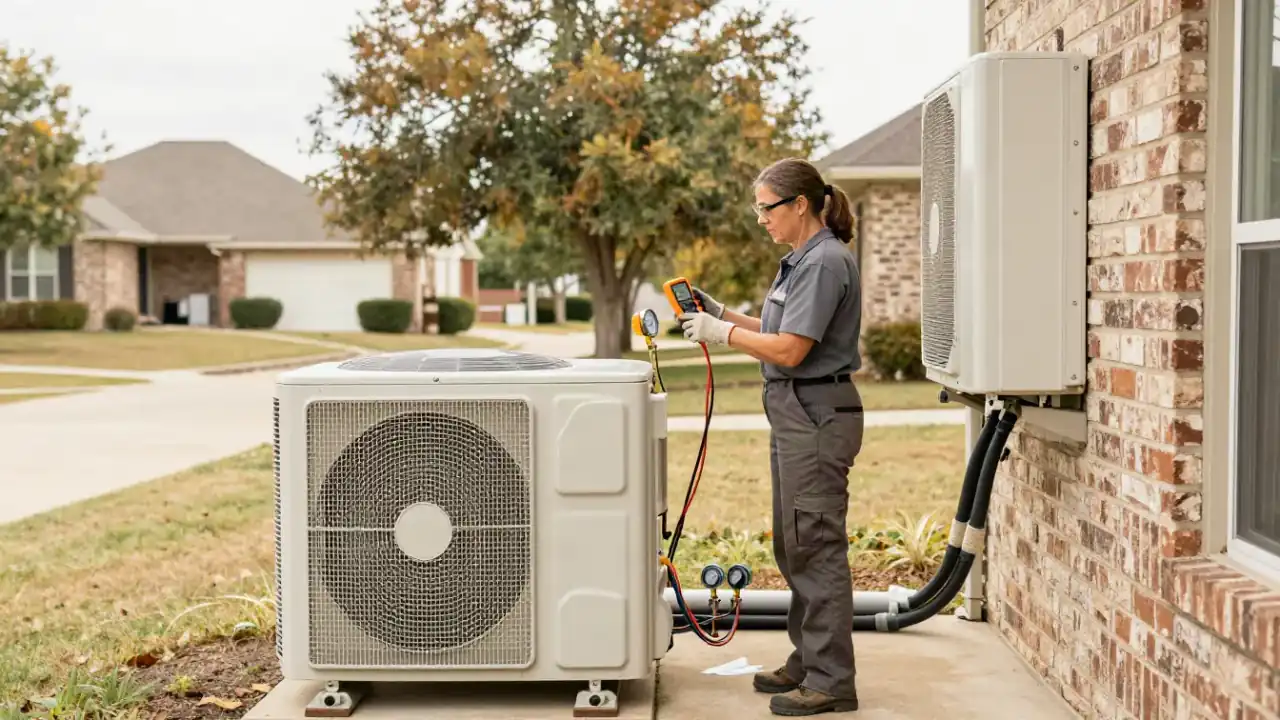
A frozen coil is one of the top reasons a mini split stops cooling. If your head is blowing warm and you can see ice, this is the repair. We thaw, diagnose, and restore cold air, usually the same day.
View service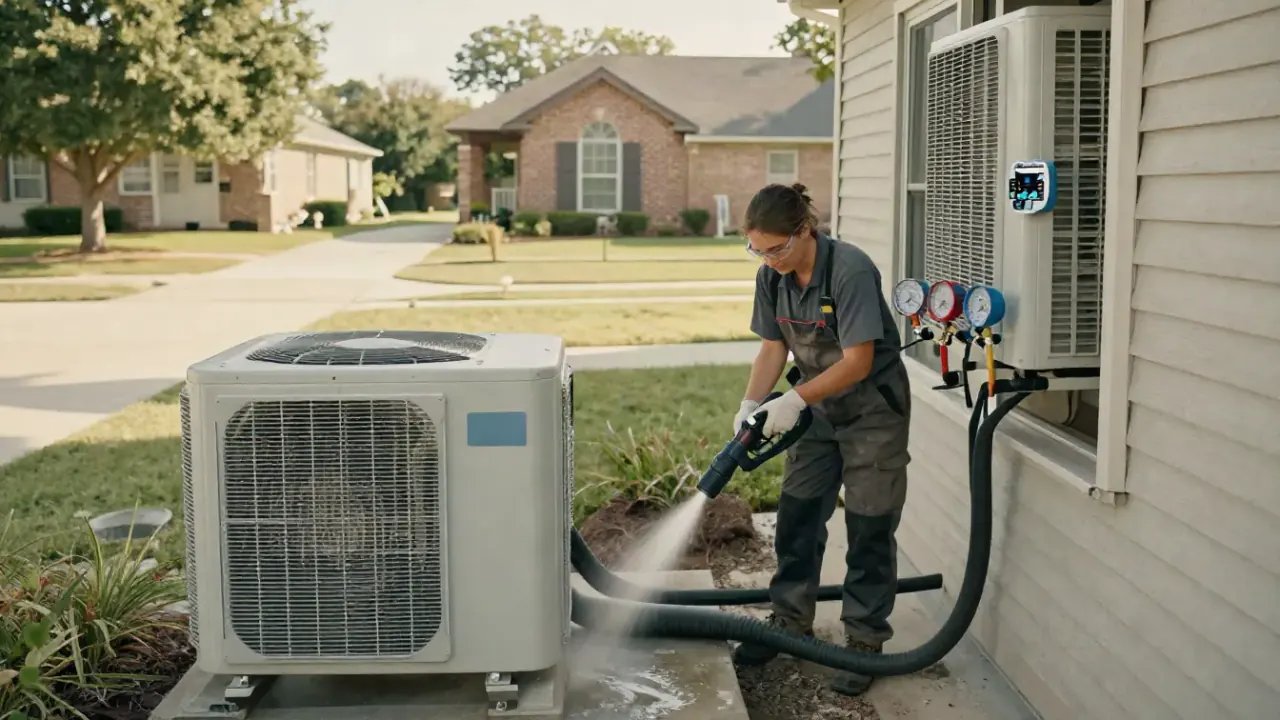
Heat pumps ice over in defrost mode, and a stuck reversing valve or low charge will keep it there. We diagnose the freeze and the heating fault together so you are not paying for two visits.
View service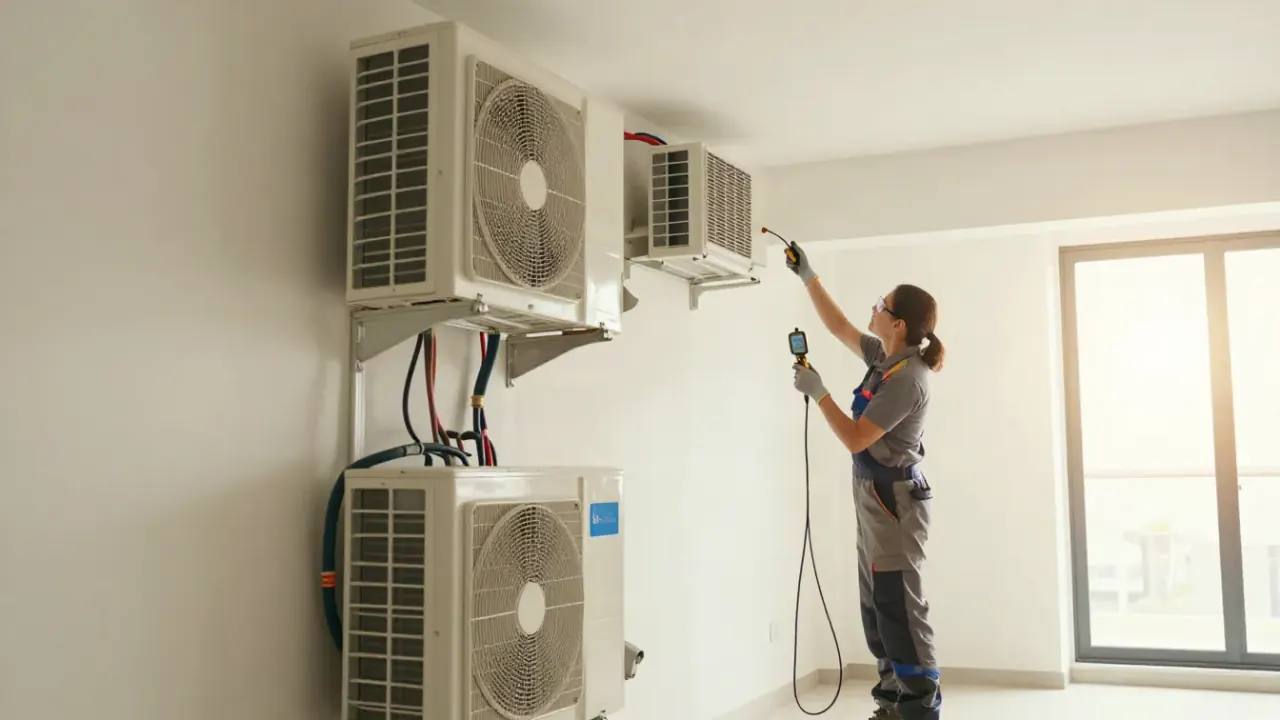
Low refrigerant is the number one cause of a frozen evaporator coil. We locate the leak with an electronic detector, repair the flare or line set, pull a deep vacuum, and weigh in the correct charge.
View serviceMost frozen coils throw a code before they ice over completely. We read the fault, clear it, and confirm the repair with live readings so the code does not come back on the next cycle.
View serviceCall (281) 738-1427 or send us a message and we'll get back to you fast. We're open Monday through Friday, 8am to 6pm, and we take emergency calls for no-cool situations. If your unit quit on a weekend, leave a message and we'll call you back first thing.