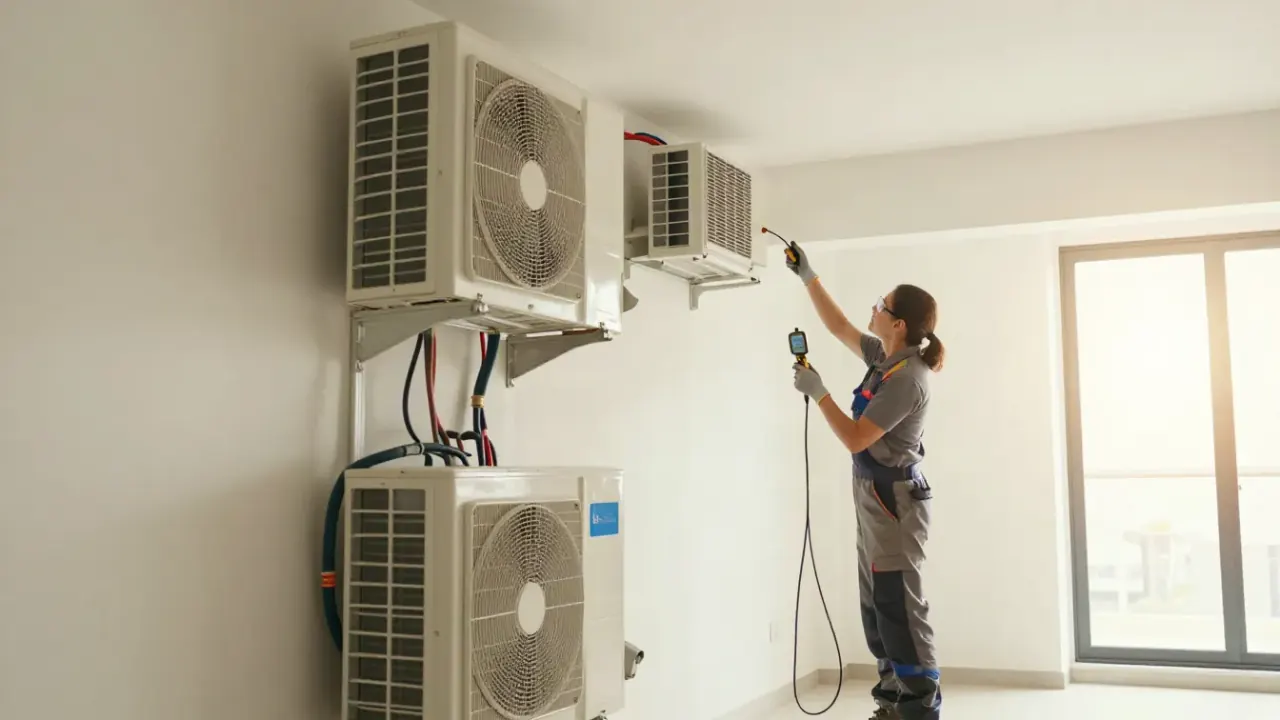
Understanding Mini Split Error Codes by Brand
A brand-by-brand guide to mini split error codes in Rosenberg, TX. Learn what Mitsubishi, Daikin, and Fujitsu codes mean and how to respond.
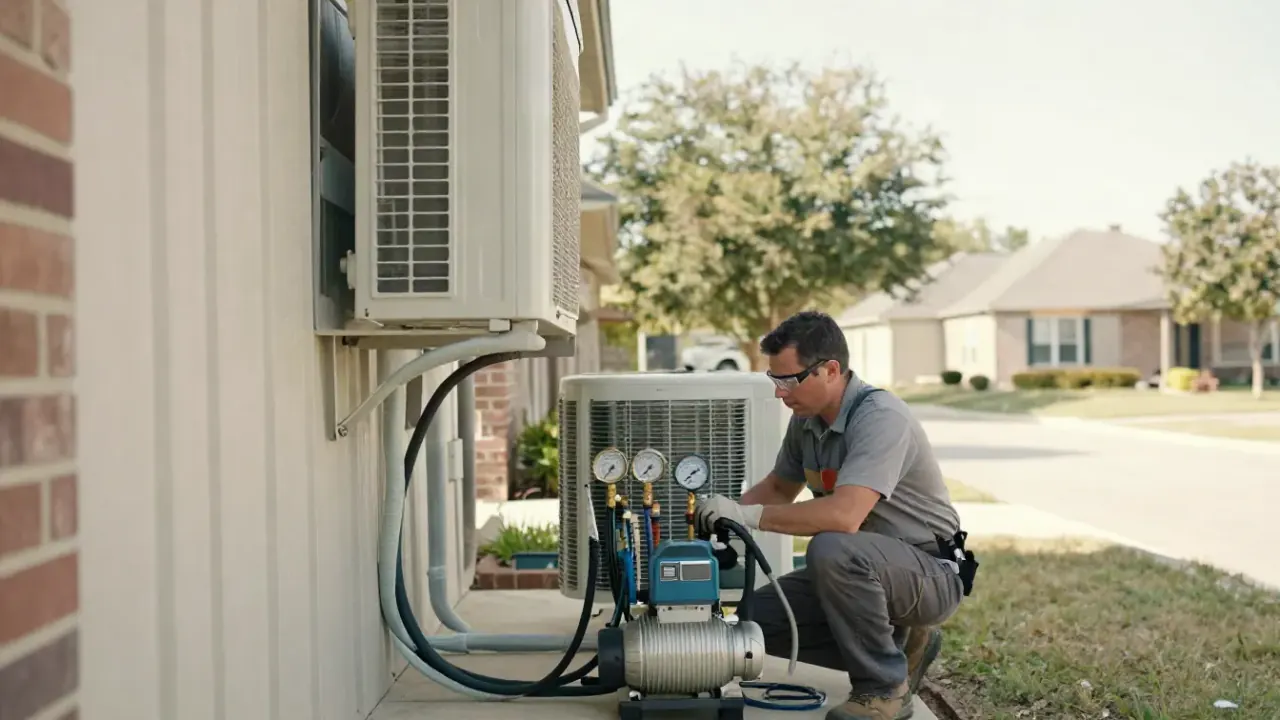
Understanding mini split error codes by brand is the fastest way to know whether you're dealing with a clogged drain line or a failing compressor. Every manufacturer uses its own numbering system, so a code that means "clean the filter" on one unit can mean "call a technician immediately" on another. In Rosenberg, where humidity runs high and systems run hard from May through September, we see the same handful of codes over and over. This guide breaks down the most common Mitsubishi, Daikin, and Fujitsu codes, what they actually mean, and how to respond without wasting money on the wrong fix.
Why Error Codes Differ by Brand
Mini split error codes are manufacturer-specific diagnostic messages that tell you which sensor, board, or component has fallen outside its normal operating range. There is no universal standard. Mitsubishi uses a two-digit alphanumeric format, Daikin uses a combination of LED blinks and a code displayed on the remote, and Fujitsu uses a two-digit numeric code shown on the indoor unit's display or via a blinking LED pattern.
That lack of standardization is why the same symptom - say, a unit that runs but doesn't cool - can trigger completely different codes depending on the brand. A Mitsubishi might flash "P8" for an inverter overload, while a Daikin shows "U4" for a communication fault between indoor and outdoor units. Knowing the brand is the first step. Knowing what the code means for that brand is the second.
We work on all three major brands daily across Mini Split Repair Rosenberg TX, and the pattern is consistent: homeowners who understand their brand's code language save themselves a diagnostic fee and often a same-day repair.
How to Read Mini Split Error Codes by Brand in Rosenberg
Reading a mini split error code starts with locating the display. On most wall-mounted indoor units, the code appears on the front panel or flashes via a small LED near the receiver. On some Daikin and Fujitsu models, you need to press a combination of buttons on the remote to enter diagnostic mode.
Here's the general process we walk homeowners through:
- Check the indoor unit display. If it shows a code, write it down exactly - letters and numbers matter.
- Check the remote. Some brands (especially Daikin) display the fault code on the remote screen when you point it at the unit and press the diagnostic button.
- Count the LED blinks. If there's no display, a blinking LED pattern is the code. Count the long and short blinks separately.
- Look up the code for your specific brand. A Mitsubishi "E1" is not the same as a Fujitsu "E1."
- Try a hard reset. Turn the unit off at the breaker for 60 seconds, then restore power. If the code clears and doesn't return within an hour, it may have been a transient fault.
If the code returns after a reset, the underlying issue is still there. That's when you need Mini Split Error Code Diagnostics Rosenberg TX from a technician who can read live sensor data, not just the code itself.
Mitsubishi Mini Split Error Codes in Texas
Mitsubishi mini split error codes in Texas tend to cluster around three issues: refrigerant pressure, communication faults, and inverter board failures. The Texas heat pushes these systems to their limits, and when a Mitsubishi throws a code, it's usually telling you something specific about the refrigeration cycle or the control board.
Common Mitsubishi Codes We See in Rosenberg
- P1: Indoor unit fan motor failure or blocked airflow. Check the filter and blower wheel first.
- P4: Outdoor unit thermistor fault. The sensor that reads ambient temperature has failed or is reading out of range.
- P8: Inverter overload. The compressor is drawing too much current, often due to a failing compressor or a restricted refrigerant line.
- E1: Communication error between indoor and outdoor units. Could be a loose wire, a bad board, or a power supply issue.
- E5: High-pressure switch tripped. Usually a sign of overcharged refrigerant or a blocked condenser coil.
A P8 code on a Mitsubishi is the one that worries us most. It often means the compressor is on its way out, and ignoring it can turn a $400 repair into a $1,800 replacement. If you see P8, stop running the unit and call us.
We also see a lot of Mitsubishi systems in Mini Split Repair in Briarwood Crossing, where the newer construction means these units are still under 10 years old but already showing wear from the heat.
Daikin Mini Split Error Codes in Rosenberg
Daikin mini split error codes in Rosenberg are a bit trickier to read because Daikin often uses a combination of LED blinks and a remote-displayed code. The code itself is usually a letter followed by a number, and it points to a specific sensor or communication path.
Common Daikin Codes and What They Mean
- U0: Refrigerant shortage. The system detects low pressure, which almost always means a leak.
- U4: Communication fault between indoor and outdoor units. Check the interconnecting wiring and the control boards.
- A5: Freeze-up protection or high-pressure control. The coil is frozen or the system is overheating.
- C4: Indoor heat exchanger thermistor fault. The sensor that reads coil temperature has failed.
- E7: Outdoor fan motor fault. The fan isn't spinning, which causes the system to overheat.
A U0 code on a Daikin is a refrigerant leak until proven otherwise. We've seen homeowners add refrigerant three times before finally calling us, only to find a pinhole leak in the line set that cost $250 to fix. If you're seeing U0 repeatedly, you need Refrigerant Leak Repair and Recharge Rosenberg TX - not another top-off.
Daikin systems are common in Mini Split Repair in Kingdom Heights, and we've noticed that the ones installed in attic spaces tend to throw more communication faults because of the heat up there.
Fujitsu Mini Split Error Codes in Rosenberg, Texas
Fujitsu mini split error codes in Rosenberg, Texas, are numeric and displayed on the indoor unit. Fujitsu uses a two-digit code system, and the codes are generally more straightforward than Mitsubishi or Daikin - but that doesn't mean they're less serious.
Common Fujitsu Codes We Diagnose
- E1: Communication error. Same as Mitsubishi's E1 but with different wiring conventions.
- E2: Indoor unit thermistor fault. The room temperature sensor is reading incorrectly.
- E4: Outdoor unit thermistor fault. The outdoor sensor has failed.
- E5: Indoor fan motor fault. The blower motor is drawing too much current or has stopped.
- EE: Compressor protection or inverter error. This is the one that usually means a major component failure.
An EE code on a Fujitsu is the equivalent of a check-engine light that won't go away. It means the compressor or inverter board has detected a fault it can't recover from. We've replaced more Fujitsu inverter boards in the last two years than in the previous five combined, likely because the units are running longer cooling seasons.
If you're searching for Mini Split Repair in Richmond, we cover that area too - Fujitsu systems are popular in the older neighborhoods there, and many are due for their first major repair.
Common Mistakes Homeowners Make with Fault Codes
The biggest mistake we see is treating a code as the problem instead of a symptom. A code tells you where the system detected an issue, not necessarily what caused it. Here are the errors we see most often:
- Resetting the breaker and hoping for the best. A reset clears the code but doesn't fix the underlying fault. If the code returns, you've lost time and put more stress on the system.
- Assuming all codes mean the same thing across brands. A Fujitsu E1 is not a Mitsubishi E1. Always look up the code for your specific brand.
- Adding refrigerant without finding the leak. If your system is low on refrigerant, it's leaking. Topping it off without repairing the leak is a temporary fix that wastes money.
- Ignoring a code that clears on its own. Intermittent codes often point to a failing sensor or a loose connection that will eventually fail completely.
- Running the unit with a known fault. A compressor running with low refrigerant or a failing inverter board can destroy itself in a matter of days.
We've seen homeowners spend $600 on refrigerant top-offs over two summers before finally calling us, only to find a $180 leak repair would have solved it the first time. Don't be that homeowner.
When to Call a Professional
Call a professional when the code returns after a reset, when you see any code related to the compressor or inverter, or when you're not comfortable working around electrical components. Mini splits are not like window units - they have complex control boards, high-pressure refrigerant lines, and sensors that require a multimeter and a manufacturer-specific diagnostic tool to test properly.
If you're in Rosenberg and your system is throwing a code you don't recognize, our team at Rosenberg Mini Split Repair can diagnose it and give you a straight answer on whether it's a simple fix or a bigger repair. We carry common sensors, boards, and fan motors on our trucks, so most repairs are done in a single visit.
We also handle Mini Split Cleaning and Maintenance Rosenberg TX to keep your system from throwing codes in the first place. A clean coil and a clear drain line prevent a surprising number of the faults we see.
Frequently Asked Questions
What does my Mitsubishi mini split error code mean in Rosenberg TX?
Mitsubishi codes like P1, P4, P8, E1, and E5 point to specific faults: P1 is a fan motor issue, P4 is an outdoor thermistor fault, P8 is an inverter overload, E1 is a communication error, and E5 is a high-pressure trip. P8 and E5 are the most urgent - stop running the unit and call a technician.
How do I read Daikin mini split error codes in Texas?
Daikin codes usually appear on the remote or as a blinking LED pattern. Common codes include U0 (refrigerant shortage), U4 (communication fault), A5 (freeze-up or high pressure), C4 (indoor thermistor), and E7 (outdoor fan motor). Write down the exact code and look it up for your model.
What are common Fujitsu mini split error codes in Rosenberg?
Fujitsu codes are numeric: E1 (communication error), E2 (indoor thermistor), E4 (outdoor thermistor), E5 (indoor fan motor), and EE (compressor or inverter fault). EE is the most serious and usually requires a technician to diagnose the compressor and inverter board.
How do I reset my mini split error code in Rosenberg TX?
Turn the unit off at the breaker for 60 seconds, then restore power. If the code clears and doesn't return within an hour, it may have been a transient fault. If it returns, the underlying issue is still present and needs professional diagnosis.
Can I fix a mini split error code myself?
You can safely clean filters, clear drain lines, and reset the breaker. Anything involving refrigerant, control boards, sensors, or the compressor requires a licensed technician with the right tools. Attempting those repairs yourself can void your warranty and damage the system further.
Get Help with Mini Split Repair in Rosenberg
If your mini split is throwing a code you can't clear, we can help. Our team diagnoses Mitsubishi, Daikin, and Fujitsu systems every day in Rosenberg and the surrounding areas, and we'll tell you exactly what's wrong before we start any work.
Call Rosenberg Mini Split Repair at (281) 738-1427 to schedule a diagnostic visit. We'll read the code, test the components, and get your system back to running quietly and efficiently.